

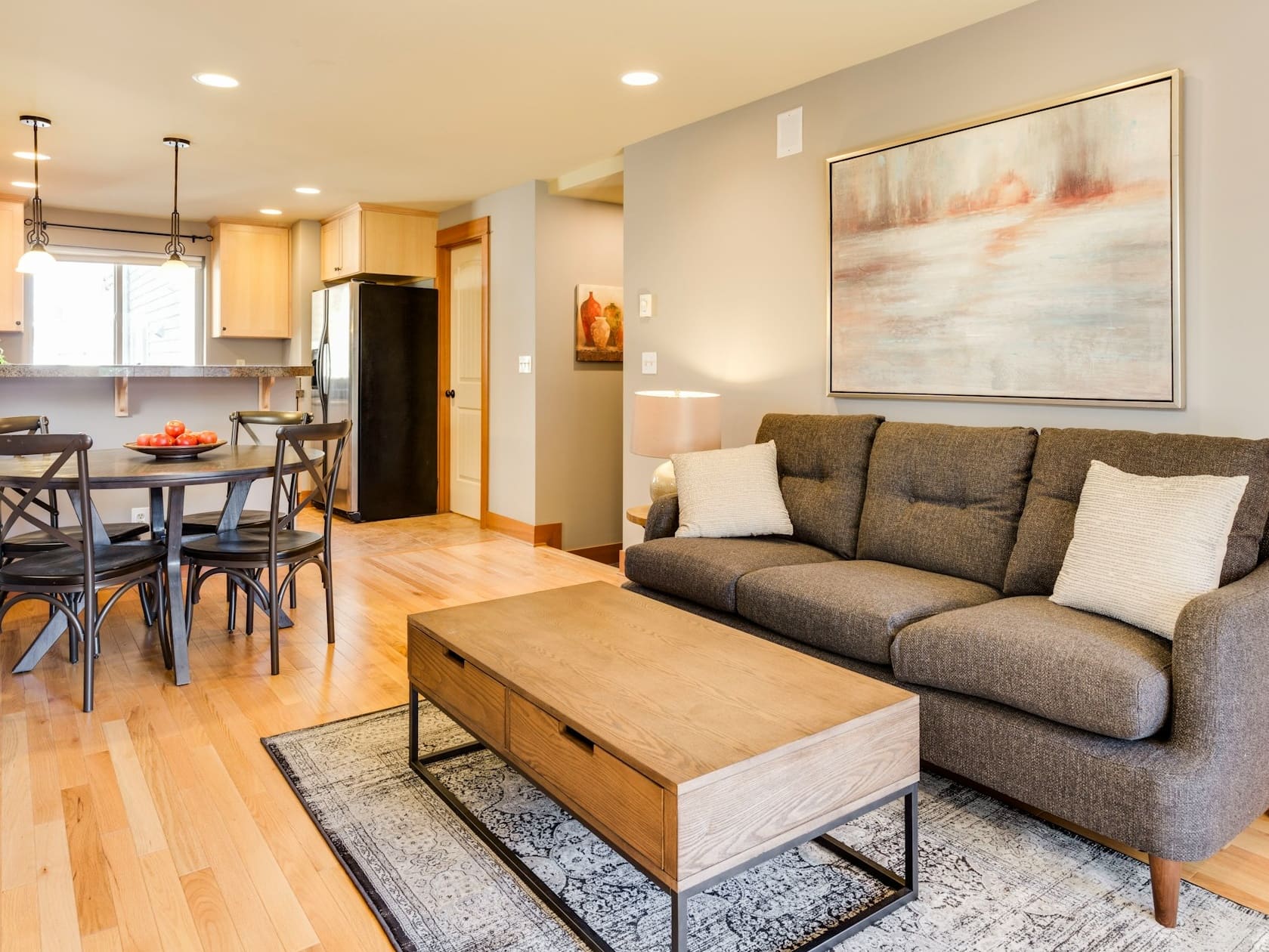
A living room can contain a sofa, coffee table, rug, lamps, artwork, and cushions and still feel strangely uncomfortable.
Sometimes the furniture faces the wrong direction. Sometimes the only light comes from the ceiling. A rug can feel disconnected from the seating, every wall may compete for attention, or the room might look polished without reflecting much about the people who actually live there.
The most useful living room décor ideas start with comfort and function rather than shopping. Arrange the furniture first, identify the focal point, improve the lighting, soften the room with textiles, build a connected color palette, and finish with art and objects that mean something to you.
Start With How You Actually Use the Living Room
Before buying cushions or deciding what belongs above the sofa, think about what happens in the room every day.
Your living room might support:
- Relaxing
- Watching television
- Conversation
- Reading
- Entertaining
- Children’s play
- Games
- Occasional work
- Listening to music
Ask yourself:
- What happens here every day?
- What happens only occasionally?
- How many people normally use the room?
- Which activities need their own seating, surface, or light?
A room designed mainly for television may need a different arrangement from one used for conversation and entertaining.
Identify What Currently Feels Uncomfortable
Instead of starting with what you want to buy, identify what does not work.
Examples:
- Seats feel too disconnected for conversation.
- Everyone turns awkwardly toward the television.
- There is nowhere convenient to put a drink.
- The reading chair has no useful lamp.
- Walking through the room requires weaving around furniture.
- Decorative objects occupy surfaces you actually need.
Those problems are easier to solve than a vague goal such as “make the living room cozier.”
Arrange the Furniture Before Adding More Décor
Furniture arrangement determines whether the room works before decorative layers are added.
Start with what you already own.
Position the Main Seating Piece First
This is usually:
- Sofa
- Sectional
- Pair of armchairs
Consider:
- Main room function
- Focal point
- Doors and windows
- Walking routes
- Secondary seating
Do not automatically place the sofa where it has always been.
Sometimes moving one large piece changes the entire room.
Arrange Seating for Conversation
Instead of pointing every seat in exactly the same direction, try to create a relationship among the pieces.
Possible arrangements include:
- Sofa with two chairs opposite or angled toward it
- Two sofas facing each other
- Sectional with one movable chair
- Sofa with an armchair turned slightly toward the seating group
You can still accommodate a television without making it the only thing every piece of furniture acknowledges.
Don’t Automatically Push Everything Against the Walls
Furniture does not always need to hug the perimeter.
Floating a sofa or chair may help:
- Define a seating area
- Create a clearer zone within a larger room
- Make space for a slim console behind a sofa
- Separate living and dining areas
- Give furniture a more intentional relationship
In a narrow or very small living room, wall placement may still make more sense.
Treat floating furniture as an option rather than a rule.
Protect Natural Walking Routes
You should be able to:
- Enter the room
- Reach the sofa
- Access doors
- Move between adjoining spaces
without taking an awkward route around furniture.
If a coffee table, chair, or side table constantly gets in the way, reconsider its position before adding more décor.
Make Side Surfaces Useful
Look at each seat and ask what someone sitting there might need.
Could they comfortably reach:
- A side table
- The coffee table
- A reading lamp
- A safe charging point where available
A side table should solve a practical need, not simply occupy an empty corner.
Give the Room a Clear Focal Point
A focal point gives the room visual direction.
It can also help you decide where furniture, art, and color should concentrate.
Use an Existing Architectural Feature
Possible focal points include:
- Fireplace
- Large window
- Built-in shelving
- Distinctive wall
- Architectural niche
If the room already has a strong feature, consider arranging furniture so it acknowledges it.
Create a Focal Point When You Need One
If the room lacks an obvious feature, you can create one with:
- Large artwork
- Gallery composition
- Statement rug
- Painted accent wall
- Decorative cabinet
- Personal collection
- Large plant where conditions are suitable
The goal is not to make everything dramatic.
It is to establish visual hierarchy.
Decide How the Television Fits In
The television can be:
- The main focal point
- One of two focal points
- Integrated with shelving or art
- Secondary to another feature
There is no need to hide it simply because some decorating advice says you should.
A living room should reflect how you actually use it.
Avoid Too Many Competing Focal Points
A room becomes visually busy when everything demands attention at once.
For example:
- Bold wallpaper
- Large patterned rug
- Bright statement art
- Dramatic fireplace
- Many colorful accessories
can all work individually, but using all of them as equal focal points may make the room feel unsettled.
Choose what should lead and let the other elements support it.
Use a Rug to Connect the Seating Area
A rug can help the sofa, chairs, and coffee table read as one group instead of separate objects.
Arrange Furniture Before Choosing the Rug
Use this sequence:
- Arrange the sofa and chairs.
- Understand the footprint of the seating area.
- Measure that area.
- Then choose the rug.
Buying the rug first can leave you trying to force the furniture into a layout that does not suit the room.
Make the Rug Relate to the Furniture
The rug should visually belong to the seating arrangement.
There is no single rule requiring every leg of every piece of furniture to sit on the rug.
Different room sizes and layouts can support different configurations.
What matters is that the rug feels connected to the seating group rather than floating independently in the middle of the room.
Use the Rug for Color and Texture
A rug can provide:
- Base color
- Pattern
- Texture
- Contrast
- Connection between different furniture finishes
A neutral sofa, for example, can feel more intentional when the rug introduces a subtle pattern that reappears in cushions or artwork.
Avoid the Tiny-Rug Effect
A small rug sitting only under the coffee table can make the rest of the furniture feel disconnected.
Measure after arranging the room rather than choosing a rug by appearance alone.
Layer Textiles for Physical and Visual Comfort
Textiles soften the hard surfaces of a room and make furniture feel more connected.
Useful layers include:
- Rugs
- Cushions
- Throws
- Curtains
- Sofa covers where appropriate
Start With the Largest Textile
Usually, that will be:
- Rug
- Curtains
- Sofa upholstery
Let those large pieces guide smaller choices.
If your rug already contains green, beige, and rust, you do not need to invent three completely new colors for the cushions.
Mix Texture, Not Just Color
Possible textile contrasts include:
- Linen
- Cotton
- Wool
- Velvet
- Bouclé
- Knitted textures
You do not need every surface to match.
A smooth sofa, textured cushion, and knitted throw can create variety even when the colors remain restrained.
Use Cushions With a Simple Palette
One workable approach is:
- One patterned cushion
- One or two colors repeated from the rug or artwork
- A few different textures
- Patterns at different scales where appropriate
You do not need ten cushions for a sofa to look finished.
Use enough to add comfort and color without making the seating difficult to use.
Add Throws Where They Will Actually Be Used
Good locations include:
- Sofa arm
- Chair
- Accessible basket
Avoid covering every seat with blankets purely for appearance.
Use Curtains as Part of the Room
Curtains can contribute:
- Color
- Pattern
- Texture
- Privacy
- Light control
Actual blackout or light-filtering performance depends on the specific fabric and product, so check manufacturer information when those features matter.
Layer the Lighting Instead of Relying on One Ceiling Light
Living-room lighting should support more than one activity.
A useful approach is to combine:
- General lighting
- Task lighting
- Mood or accent lighting
General Lighting
General lighting provides broad illumination for moving around and using the room.
Possible sources include:
- Ceiling fixture
- Pendant
- Flush or semi-flush fixture
- Broad floor lamp in some layouts
Task Lighting
Task lighting supports specific activities.
Examples:
- Reading floor lamp beside an armchair
- Table lamp beside the sofa
- Adjustable lamp near a small workspace
Think about where people actually read, work, or play games.
Mood or Accent Lighting
This can:
- Illuminate a shelf
- Highlight artwork
- Add softer evening light
- Brighten a dark corner
It does not need to be dramatic.
Even one table lamp can make the lighting feel more layered than a room that relies exclusively on a ceiling fixture.
Use Light at Different Heights
Instead of putting all the light overhead, combine different levels.
For example:
- Ceiling fixture
- Floor lamp
- Table lamp
- Shelf or cabinet lighting where suitable
This makes it easier to adapt the room to different activities.
Keep electrical work separate from decorating. Plug-in lamps are straightforward décor elements; new wiring, moving electrical boxes, or installing hardwired fixtures is a different type of project.
Build a Color Palette From What You Already Own
You do not need to begin with a complicated color formula.
Start with something already in the room that you like.
Choose One Existing Starting Point
That might be:
- Rug
- Artwork
- Sofa
- Curtains
- Favorite chair
- Wood tone
Then pull a few related colors from it.
Let Large Surfaces Establish the Base
The largest visual areas usually include:
- Walls
- Sofa
- Rug
- Curtains
Get those working together before adding several accent colors.
Repeat Accent Colors
Instead of giving every object its own color, repeat selected tones in:
- Cushions
- Artwork
- Books
- Ceramics
- Throws
For example, a green detail in artwork might appear again in two cushions or a decorative object.
That repetition helps the room feel connected.
Don’t Assume Neutral Is the Only Comfortable Choice
A welcoming living room can use:
- Warm neutrals
- Cool neutrals
- Deep colors
- Muted colors
- Brighter accents
The right palette depends on the room and the atmosphere you want.
Test Paint in the Actual Room
If you plan to repaint, view samples:
- In the morning
- In the afternoon
- In the evening
- Under artificial lighting
Color can appear different as the light changes, so do not make a final decision from a tiny sample viewed once.
Use Art to Give the Room Identity
Art should feel connected to the room rather than added simply because a wall is empty.
Choose Art You Actually Want to See
That might include:
- Painting
- Photography
- Textile
- Children’s art
- Travel piece
- Vintage object
- Personal collection
Your living room does not need generic “living room artwork.”
Relate Art to the Furniture Below It
Common compositions include:
- One substantial piece above a sofa
- Pair or grouping above a console
- Gallery arrangement on a larger wall
The exact placement depends on the wall, furniture, artwork, and mounting method.
Let Art Influence the Palette
Artwork can provide:
- Accent colors
- Contrast
- Mood
- A starting point for cushions or textiles
If a painting includes several colors already present in the room, repeating one or two of those tones elsewhere can help the composition feel intentional.
Plan Gallery Walls Before Making Holes
Use this process:
- Gather the pieces.
- Arrange them on the floor.
- Measure the overall grouping.
- Transfer the layout carefully to the wall.
- Use hardware suitable for the wall and object weight.
Do not guess about hanging hardware for heavy pieces.
Add Personal Touches Without Creating Clutter
Personal objects are often what stop a living room from feeling like a showroom.
Display Objects With Meaning
Examples include:
- Travel souvenirs
- Family photos
- Books
- Ceramics
- Artwork
- Heirlooms
- Handmade objects
- Collections
These pieces can tell more about you than generic décor bought purely to fill shelves.
Group Related Objects
Instead of spreading a collection across every surface, give it one intentional area.
For example:
- One shelf
- Console
- Cabinet
- Gallery wall
- Tray
A group of related objects usually reads more clearly than the same objects scattered around the room.
Rotate Rather Than Display Everything
You do not need every meaningful possession on display at once.
Rotating items can:
- Reduce visual clutter
- Make cleaning easier
- Allow seasonal changes
- Give individual objects more attention
Use Books as Books
Display books you:
- Read
- Reference
- Enjoy
- Want nearby
They do not need to be arranged by color unless that genuinely appeals to you.
Balance Décor With Visual Breathing Room
A comfortable living room also depends on what you leave out.
Clear the Main Functional Surfaces
Review:
- Coffee table
- Side tables
- Console
- Media unit
- Shelves
Ask which objects genuinely need to stay there.
Preserve Space for Daily Life
A coffee table should still have room for:
- Drink
- Book
- Remote
- Game
A side table should still be able to hold a lamp or cup.
If styling removes the practical function of the furniture, simplify it.
Don’t Decorate Every Wall
Blank wall areas can help separate:
- Artwork
- Windows
- Shelving
- Architectural features
Not every empty section needs another frame or shelf.
Hide Visually Busy Categories
Closed storage can help with:
- Cables
- Games
- Toys
- Electronics accessories
- Papers
- Spare items
This allows open shelves and surfaces to display fewer, more intentional objects.
Living Room Problems and Décor Solutions
| Living Room Problem | Décor Move | Why It Helps |
|---|---|---|
| Furniture feels disconnected | Rearrange seating around a shared zone | Creates a clearer room purpose |
| Room feels visually cold | Add rug, cushions, curtains, or throws | Adds textile layers and texture |
| Only overhead light feels harsh or flat | Add task and mood lighting | Provides light for different activities |
| Room lacks direction | Establish one primary focal point | Creates visual hierarchy |
| Colors feel random | Repeat a limited set of tones | Helps elements relate visually |
| Bare walls feel unfinished | Add one meaningful art grouping | Adds identity without filling every wall |
| Room feels generic | Display personal art, books, or collections | Reflects the people who live there |
| Coffee table is cluttered | Edit décor and leave usable surface space | Restores function |
| Large room feels disconnected | Use rugs and furniture to define seating zones | Creates smaller functional areas |
| Room feels overdecorated | Remove competing objects and leave open areas | Gives important pieces more visual space |
These are design strategies, not guaranteed psychological effects.
Decorate in the Right Order
A simple sequence can prevent you from buying accessories before you understand what the room actually needs.
Step 1: Decide How the Room Is Used
Identify:
- Main activities
- Number of seats
- Television needs
- Reading or work areas
Step 2: Rearrange Existing Furniture
Try moving what you already own before buying new pieces.
Step 3: Establish the Focal Point
Decide what should receive the most attention.
Step 4: Choose the Rug
Use it to reinforce the seating zone.
Step 5: Improve Lighting
Add task and mood sources according to actual activities.
Step 6: Establish the Main Color Palette
Begin with the room’s largest existing elements.
Step 7: Add Textiles
Introduce cushions, throws, and curtains as needed.
Step 8: Place Art and Personal Objects
Finish the room after the larger relationships are working.
Step 9: Edit
Remove objects that:
- Compete unnecessarily
- Block useful surfaces
- Interrupt circulation
- Do not contribute meaningfully
Common Living Room Decorating Mistakes
Buying Décor Before Fixing the Layout
No number of cushions can correct furniture that does not work for the room.
Pushing Every Piece Against a Wall
Floating furniture may create a stronger seating zone when the room allows it.
Choosing the Rug Before the Furniture Layout
Arrange and measure first.
Depending on One Ceiling Fixture
Add task and mood lighting where useful.
Choosing Paint From a Small Sample Alone
View it in the room under changing light.
Making Every Object a Statement Piece
Allow one or two elements to lead.
Filling Every Surface
Keep some areas available for actual use.
Copying a Showroom Too Literally
Use inspiration, but include:
- Your art
- Your books
- Your routines
- Your collections
- Your family’s needs
Buying Everything at Once
Build the room gradually after identifying what is genuinely missing.
Living Room Décor Ideas for Different Comfort Problems
If the Room Feels Cold
Try:
- Rug
- Curtains
- Cushions
- Throws
- Lower-level lighting
- Additional texture
If the Room Feels Cluttered
Try:
- Fewer tabletop objects
- Closed storage
- Fewer competing colors
- One stronger art grouping
- Clearer furniture zones
If the Room Feels Dark
Consider:
- Keeping windows and natural-light paths open
- Layering general, task, and mood lighting
- Adding lamps at different heights
- Evaluating wall colors under the room’s actual light
Do not assume white paint or one particular lamp automatically solves every dark room.
If the Room Feels Generic
Introduce:
- Personal art
- Family photographs
- Books
- Collections
- Travel pieces
- Handmade objects
If the Room Feels Disconnected
Focus on:
- Furniture arrangement
- Focal point
- Rug
- Repeated colors
- Lighting
before buying more accessories.
Frequently Asked Questions About Living Room Décor
What Are the Best Living Room Décor Ideas for Making a Room More Comfortable?
Start with the furniture arrangement. Then add a rug, layered lighting, useful textiles, a connected color palette, art, and meaningful personal objects. Keep walking routes clear and preserve enough table and shelf space for daily use.
How Should I Arrange Furniture in a Living Room?
Begin with the main sofa or sectional. Identify the focal point and main room activities, then arrange secondary seating so people can use the room comfortably and converse naturally. Floating furniture away from walls can work where space allows.
How Can I Make My Living Room Feel Cozy Without Buying New Furniture?
Try:
- Rearranging the seating
- Moving artwork
- Changing cushion covers
- Adding a throw you already own
- Improving lamp placement
- Removing clutter
- Displaying meaningful objects that are currently stored away
Often the room needs editing and rearranging more than another large purchase.
What Lighting Is Best for a Comfortable Living Room?
Use a combination of general, task, and mood lighting.
General lighting illuminates the overall room, task lighting supports activities such as reading, and mood lighting can add softer light or highlight specific areas.
Use lamps at different heights where practical rather than relying only on the ceiling fixture.
How Do I Choose Living Room Colors?
Start with something you already own and like, such as the rug, artwork, sofa, or curtains. Pull a limited palette from it and repeat a few tones throughout the room.
If you are repainting, test samples under both natural and artificial light before committing.
Does a Living Room Need a Focal Point?
A focal point can help organize the room visually, but it does not need to be a fireplace.
Possible focal points include:
- Artwork
- Large window
- Television
- Statement wall
- Built-ins
- Personal collection
Some rooms can support more than one focal point as long as they do not compete equally for attention.
How Do I Decorate a Living Room Without Making It Cluttered?
Use fewer intentional displays, group related objects, preserve functional table space, use closed storage for visually busy categories, and leave some walls and shelves partly empty.
Conclusion
A comfortable living room is not created by filling every wall and surface with décor.
It comes from making the room work first and decorating second.
Use this sequence:
Arrange → anchor → light → soften → color → personalize → edit.
Arrange furniture around your real activities. Establish a focal point. Use a rug to connect the seating area. Layer general, task, and mood lighting. Add textiles intentionally. Build color from what you already own. Display art and belongings that matter to you, then remove anything that makes the room harder to use.
Before buying something new, try three changes first:
Rearrange the seating, remove unnecessary décor, and identify what the room still genuinely needs.
You may find that a more comfortable living room requires less adding and more thoughtful arranging.