
A room can feel unfinished even when it already contains plenty of furniture and décor. The natural reaction is often to buy more—a new basket, another cushion, a decorative tray, a few small accessories—but adding inexpensive objects does not automatically make a space look more intentional.
The most effective home décor ideas on a budget usually begin with what you already own. Rearranging furniture, removing visual clutter, repeating a few colors and materials, and improving lighting can change a room before you spend anything. Then, when you do buy something, you can direct the budget toward the areas that still need help.
A useful order is:
Edit → rearrange → coordinate → reuse → light → layer → upgrade → stop
That last step matters. A budget room often looks better when you stop after solving the main problems instead of filling every empty wall and tabletop.
Start With the Room Before You Start Shopping
Before making a shopping list, remove some of what is already competing for attention.
Clear the Visual Noise
Temporarily remove:
- Extra tabletop accessories
- Small décor with no clear relationship to anything else
- Worn decorative pieces
- Items that belong in another room
- Objects you no longer like
This is not about making the room minimalist. It simply gives you a clearer view of the furniture, proportions, colors, and surfaces you are working with.
You may find that a console table looks better with three objects than with ten, or that a strong piece of artwork has been hidden by too many smaller frames.
Identify What Is Already Working
Look for the strongest existing elements:
- Best natural-light area
- Most attractive furniture
- Architectural detail
- Favorite artwork
- Rug worth keeping
- Textile you like
- Existing color you could repeat
Those pieces become the starting point for the rest of the room.
Pick One Main Focal Point
A room becomes easier to decorate when you know what should attract attention first.
Possible focal points include:
- Sofa wall
- Bed
- Fireplace
- Dining table
- Large window
- Main artwork
You do not need every wall or surface to compete equally.
Make a Keep, Move, Add List
Before spending anything, write three short lists.
Keep
- Sofa
- Rug
- Favorite artwork
Move
- Floor lamp
- Side table
- Plant
Add
- Two cushion covers
- Larger frame
- Better bulb
This keeps the decorating plan focused on actual gaps instead of random bargains.
Rearrange Furniture Before Replacing It
One of the best budget decorating tools is completely free: changing the layout.
Question the Current Arrangement
Furniture does not automatically need to:
- Sit against every wall
- Face the television
- Stay where it was originally placed
- Remain grouped according to where outlets happen to be
Try moving pieces enough to see whether the room functions better.
A sofa can sometimes work away from the wall, and larger furniture can help divide an open room into functional zones.
Arrange Around How You Use the Room
Ask:
- Where do people actually sit?
- Where do conversations happen?
- Is there a useful reading corner?
- Is the main walkway blocked?
- Is the best natural light being used?
Then place furniture around those activities.
For example, an unused chair may become far more useful when moved beside a lamp and small table.
Connect Large Furniture Visually
Useful groupings include:
- Sofa + coffee table
- Chair + lamp + side table
- Bed + bedside tables
- Dining table + centerpiece or pendant
The furniture does not need to match, but it should feel related.
Use Rugs to Define Zones
A rug can visually connect a seating group or separate one area from another.
Use rugs to help define:
- Living area
- Bed zone
- Dining area
The right dimensions depend on the room and furniture. Avoid buying a rug purely because it is inexpensive if it does not work with the actual layout.
If you are working with a compact room, Small Living Room Ideas That Make the Space Feel Bigger offers more layout-focused guidance.
Photograph the Room
Take a quick phone photo from the main doorway.
A photo can make it easier to notice:
- Awkward gaps
- Overloaded surfaces
- Crooked artwork
- Poor balance
- Areas that feel visually heavy
Sometimes the easiest decorating decision becomes obvious once you see the room in a flat image.
Choose a Simple Color Direction
Budget decorating can become visually messy when every inexpensive purchase introduces a different color.
Work With What You Already Have
Start with the largest fixed elements:
- Sofa
- Flooring
- Curtains
- Rug
- Cabinets
- Existing artwork
Choose a few colors that relate to those pieces rather than trying to force an entirely new palette.
Repeat Accent Colors
You do not need a matching set.
Instead, repeat one accent color through several smaller elements.
For example, muted green might appear in:
- Cushion
- Artwork
- Plant pot
- Throw
The pieces can come from different stores or different years and still feel connected.
Control Pattern Competition
If you use several patterns, connect them through:
- Shared color
- Similar scale
- Similar material
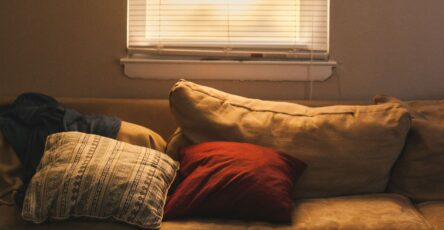
One patterned cushion can sit beside plain cushions more comfortably than five unrelated patterns fighting for attention.
Use Textiles for a High-Impact Update
Textiles are one of the easiest ways to change how a room feels without replacing expensive furniture.
Change Covers Before Furniture
Before replacing a sofa, chair, or bed, consider updating:
- Cushion covers
- Throws
- Bedding
- Curtains
These can add new color and texture while leaving the main furniture in place.
Mix Texture With Restraint
Possible combinations include:
- Smooth cotton
- Knit
- Linen-look fabric
- Velvet accent
- Natural woven texture
You do not need every texture in one room.
A sofa with smooth upholstery, a knit throw, and one textured cushion may be enough.
Let One Textile Carry the Pattern
Possible combinations:
- Patterned cushion + plain companions
- Graphic rug + quiet cushions
- Patterned bedding + simple curtains
This creates interest without making the room visually busy.
Reuse Textiles Between Rooms
Before buying anything, try moving:
- Throw from bedroom to sofa
- Cushion cover from living room to reading chair
- Neutral blanket into guest room
You may already own something that works better in another location.
Use Rugs as Anchors
A rug can help connect furniture and give a zone a clearer boundary.
Choose it according to the layout rather than treating it as a decorative patch for empty flooring.
Use Paint as an Accent
You do not need to repaint the entire room to create a noticeable change.
Keep the Project Controlled
Options include:
- One accent wall
- Small color block
- Alcove
- Suitable built-in feature
A focused paint project keeps cost, preparation, and disruption lower than a complete repaint.
Prepare the Surface
Before painting, the surface may need:
- Cleaning
- Minor patching
- Protection around edges
- Primer where the paint system requires it
Follow the exact paint manufacturer’s guidance for surface preparation, primer, dry time, and recoating.
Pull the Color From the Room
Choose the accent from something already present, such as:
- Rug
- Artwork
- Cushion
- Bedding
This helps the new wall feel connected rather than random.
Do Not Expect Paint to Solve Everything
Paint cannot fix:
- Poor furniture layout
- Excess clutter
- Weak lighting
- Undersized artwork
Solve those problems separately.
For more practical decorative projects, see DIY Home Décor Ideas That Don’t Look Homemade.
Shop Secondhand for Character, Not Just Cheapness
Thrift stores and secondhand marketplaces can be useful, but a low price alone is not a reason to buy something.
Shop With a List
Go looking for specific categories such as:
- Frames
- Mirrors
- Small wood tables
- Ceramics
- Vases
- Baskets
- Books
- Decorative trays
A list makes it easier to leave behind objects that are cheap but unnecessary.
Look Beyond the Finish
A secondhand piece may still be worth considering if:
- Finish is dated
- Color is not ideal
- Frame needs cleaning
but the:
- Shape
- Proportions
- Construction
- Material
fit your room.
Inspect Furniture Carefully
Used furniture can carry unwanted pests.
Before bringing secondhand furniture indoors, inspect it carefully—especially:
- Upholstered chairs
- Sofas
- Beds
- Pieces with seams and crevices
Hard-surface pieces are often easier to inspect and clean.
Good beginner secondhand purchases may include:
- Frames
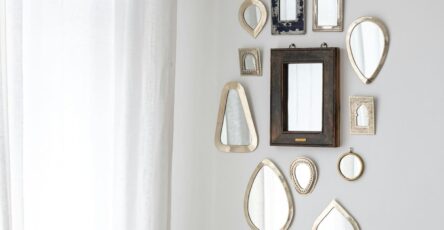
- Mirrors
- Small hard-surface tables
- Ceramics
- Trays
- Baskets that can be thoroughly inspected
Avoid taking abandoned upholstered furniture simply because it is free.
Do Not Assume Vintage Means Better
Check:
- Stability
- Damage
- Actual usefulness
- Repair needs
- Electrical condition where relevant
A cheap object that requires expensive restoration is not automatically a budget win.
Use Frames and Personal Art
Wall décor does not need to be expensive to feel personal and intentional.
Frame Things You Already Own
Possible options include:
- Family photographs
- Children’s artwork
- Postcards
- Prints
- Travel memorabilia
- Artwork you legally own and can display
A simple frame can give personal material more visual structure.
Start Small
You do not need to build a complete gallery wall immediately.
Begin with:
- One larger piece
- Two coordinated frames
- Small group
Then live with it before adding more.
Create One Repeated Element
If the artwork is varied, use consistency through:
- Frame color
- Mat style
- Similar dimensions
If the artwork is already coordinated, mixed frames can work.
The goal is repetition somewhere—not necessarily everywhere.
Look for Thrifted Frames
Before buying, check:
- Glass condition
- Backing
- Hanging hardware
- Corners
- Structural damage
A secondhand frame with a new print can be a much better purchase than an inexpensive decorative object with no personal value.
For more detailed wall planning, see Wall Décor Ideas for Empty Walls That Fit the Room and Easy DIY Wall Décor Ideas for Blank Walls That Look Intentional.
Improve the Lighting Before Buying More Décor
A room can have attractive furniture and still feel flat if the lighting is weak or poorly placed.
Use More Than One Light Source Where Needed
Depending on the room, useful lighting may include:
- Ceiling light
- Table lamp
- Floor lamp
- Task light
The goal is flexibility, not collecting lamps.
Move Existing Lamps
Before shopping, try moving a lamp:
- Next to a reading chair
- Into a dark corner
- Onto a console
- Closer to the area where you actually need it
Sometimes the problem is placement rather than the fixture.
Check the Bulb
Bulbs affect how the entire room appears.
Two useful characteristics are:
- Lumens, which describe light output
- Color temperature, which affects whether the light appears warmer or cooler
A different compatible bulb may change the appearance of a room without changing the lamp.
Keep Nearby Light Sources Intentional
If neighboring lamps produce very different-looking light, the room can feel inconsistent.
There is no single color temperature that is automatically best for every room.
Choose according to:
- Function
- Desired appearance
- Existing light
- Fixture compatibility
Keep Electrical Work Simple
Changing a compatible bulb is different from:
- Rewiring a lamp
- Changing circuits
- Replacing hardwired fixtures
Do not turn a budget décor update into unfamiliar electrical work.
Decorate With Plants Where They Can Actually Grow
Plants can bring natural texture into a room, but they are living things before they are decorative accessories.
Check the Light First
Consider:
- Window direction
- Distance from window
- Obstructions
- Direct versus indirect light
Then choose the plant.
Do not buy a plant for a dark corner simply because it looks good there.
Match the Plant to the Location
Some plants tolerate lower-light conditions better than others, while others need brighter conditions.
Use plant-specific guidance rather than assuming all indoor plants have the same needs.
Consider One Larger Plant
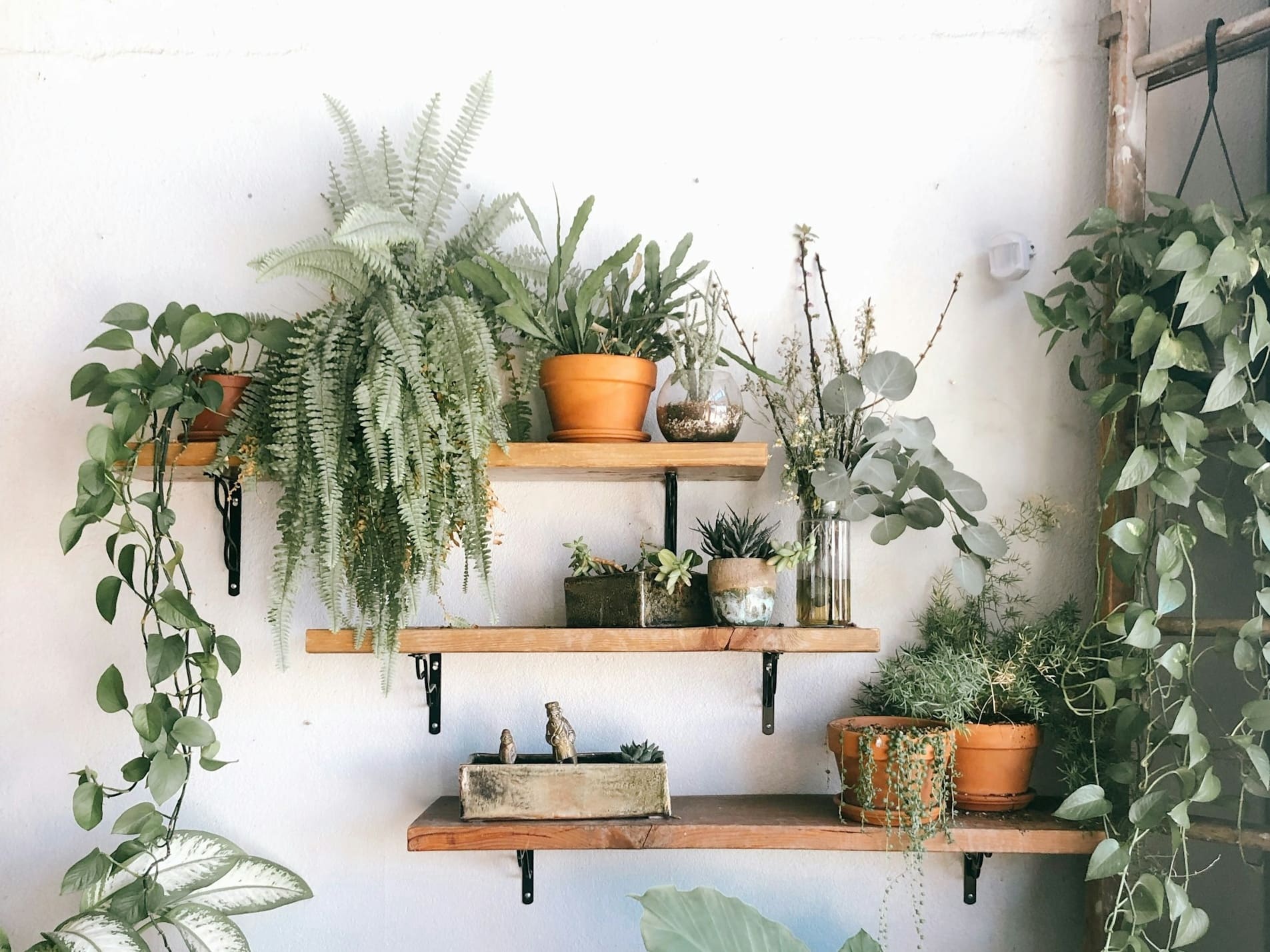
Where the room and plant conditions allow it, one larger plant may create a clearer visual focal point than many unrelated tiny pots.
That is a design choice, not a horticultural rule.
Reuse Decorative Containers
An existing decorative pot can help connect the plant to the room’s color palette.
Where appropriate, keep the plant in an inner container that provides suitable drainage.
Water According to the Plant, Not the Décor Schedule
Plants in lower light often grow more slowly and may use water more slowly.
Check actual soil and plant needs before watering.
Mellora’s How Often Should You Water Container Plants? A Practical Guide to Getting It Right provides more help with moisture-based watering.
Style the Objects You Already Own
Before buying accessories, improve the way existing objects are displayed.
Group Instead of Scatter
Good styling areas include:
- Coffee table
- Console
- Sideboard
- Shelf
A simple group might contain:
- Two books
- One vase
- One personal object
That often feels more intentional than placing one small accessory on every surface.
Display Attractive Useful Objects
You may already own things worth showing:
- Books
- Ceramics
- Bowls
- Baskets
- Framed photographs
Useful objects can contribute to décor without requiring another decorative purchase.
Repeat Materials
For example:
- Black frame + black lamp
- Wood tray + wood frame
- Woven basket + natural-fiber rug
These relationships help separate objects feel connected.
Leave Empty Space
Not every:
- Shelf
- Table
- Wall
- Corner
needs something on it.
Empty space helps the strongest pieces remain visible.
Make Selective Upgrades
After you rearrange, restyle, improve lighting, and update a few textiles, you may still find one part of the room that feels weak.
That is where the budget should go.
Upgrade What You Notice Most
Possible purchases include:
- Lamp
- Rug
- Curtain
- Bedding
- Cabinet hardware
- Larger artwork
- Better frame
- Side table
Fix the Weakest Link
For example:
Good sofa + weak lighting
Improve the lighting.
Good furniture + bare wall
Add larger artwork.
Good layout + mismatched textiles
Coordinate covers or throws.
Good room + tired hardware
Replace the hardware.
Prefer One Strong Upgrade
Instead of buying five inexpensive decorations, consider putting the same budget toward:
- Better floor lamp
- Larger rug
- Larger artwork
- Better textile
The correct choice depends on what the room actually lacks.
Buy Slowly
Make one change, then reassess.
Once furniture is rearranged and lighting improves, you may discover that fewer new accessories are necessary.
Budget Home Décor Ideas at a Glance
| Idea | Cost Level | What It Changes | Best Starting Point | Watch Out For |
|---|---|---|---|---|
| Rearrange furniture | Free | Flow and focal points | Existing major pieces | Blocking circulation |
| Edit visible surfaces | Free | Clutter and emphasis | Tables, shelves, consoles | Removing too much personality |
| Restyle existing objects | Free | Cohesion | Books, ceramics, photos | Overfilling surfaces |
| Change cushion covers or throws | Low | Color and texture | Sofa or bed | Too many patterns |
| Reframe personal art | Low | Wall impact | Photos and prints | Incorrect hanging hardware |
| Add a paint accent | Low–Moderate | Color and focal point | One controlled surface | Poor preparation |
| Shop thrifted décor | Low–Variable | Character and variation | Frames, hard surfaces | Condition and pest inspection |
| Change compatible bulbs | Low | Light appearance | Existing fixtures | Bulb incompatibility |
| Add a plant | Low–Moderate | Natural texture | Suitable light location | Choosing by looks alone |
| Make one selective upgrade | Variable | Corrects weakest area | Lamp, rug, textile, hardware | Buying without a plan |
A budget room looks intentional when the pieces relate to one another—not simply because everything was inexpensive.
Common Budget Decorating Mistakes
Shopping Before Rearranging
You may already own the solution.
Buying Too Many Small Accessories
Several inexpensive objects can cost more and create more clutter than one useful upgrade.
Following Trends That Fight the Existing Room
Working with existing:
- Furniture
- Flooring
- Colors
- Finishes
is usually easier than forcing a complete style reset.
Using Too Many Unrelated Colors
Repeat a few accents instead.
Buying a Rug Only Because It Is Cheap
A poor fit in:
- Scale
- Shape
- Color
can weaken the furniture arrangement.
Treating Every Blank Wall as a Problem
Some empty wall space improves visual balance.
Bringing Home Secondhand Upholstery Without Inspection
Inspect used furniture before bringing it indoors, particularly upholstered pieces.
Putting Plants Where They Look Best
The light conditions should determine plant placement first.
Ignoring Lighting
Lighting affects how furniture, wall colors, and finishes appear.
Assuming Everything Must Match
A room can feel cohesive through repeated:
- Colors
- Materials
- Shapes
- Finishes
without using a complete matching set.
Trying to Finish the Room in One Shopping Trip
Good rooms can develop gradually.
Decorate a Room on a Budget in the Right Order
If you are starting from scratch, work through the room in this order.
Step 1: Remove Visual Clutter
Clear enough décor to see the major furniture.
Step 2: Rearrange the Main Pieces
Improve:
- Function
- Conversation
- Walkways
- Focal point
Step 3: Choose a Simple Palette
Use existing large furniture and fixed finishes as your starting point.
Step 4: Restyle What You Own
Move:
- Artwork
- Books
- Frames
- Lamps
- Baskets
- Decorative objects
Step 5: Improve Lighting
Reposition lamps and evaluate compatible bulbs.
Step 6: Add Textiles
Choose pieces that add useful:
- Color
- Texture
- Pattern
Step 7: Fix the Weakest Area
Consider:
- Paint accent
- Artwork
- Plant
- Gallery wall
- Larger textile
Step 8: Shop Secondhand With a List
Buy for actual gaps.
Step 9: Make One Selective Upgrade
Put your remaining budget toward the part of the room that still feels weakest.
Step 10: Stop and Reassess
Live with the changes before adding more.
Remember:
Edit → rearrange → coordinate → reuse → light → layer → upgrade → stop
Frequently Asked Questions About Home Décor on a Budget
What Are the Best Home Décor Ideas on a Budget?
Start with free improvements:
- Remove visual clutter.
- Rearrange furniture.
- Restyle existing objects.
- Move lamps and artwork.
Then consider:
- Textiles
- Frames
- Small paint accents
- Secondhand pieces
- Plants
- One selective upgrade
How Can I Make My Home Look Better Without Buying Anything?
Try:
- Moving furniture
- Swapping décor between rooms
- Grouping accessories
- Removing excess objects
- Repositioning artwork
- Moving lamps
- Restyling books and ceramics
What Inexpensive Décor Can Make the Biggest Difference?
It depends on what the room is missing.
Useful categories can include:
- Cushion covers
- Throws
- Paint
- Frames
- Lamps
- Compatible bulbs
- Plants
How Do I Make Inexpensive Décor Look More Intentional?
Repeat something.
That could be:
- Color
- Frame finish
- Material
- Texture
Cohesion matters more than whether the items came from the same store.
Is Thrifted Home Décor Worth Buying?
It can be a good source for:
- Frames
- Mirrors
- Hard-surface furniture
- Ceramics
- Decorative objects
Inspect condition carefully, and inspect used furniture for pests before bringing it into your home.
Can Lighting Really Change a Room?
Yes.
Brightness and light appearance affect how walls, furniture, and finishes look.
Check:
- Lumens
- Color temperature
- Fixture compatibility
rather than choosing bulbs only by appearance in the package.
What Plants Work Best for Budget Décor?
Choose plants according to the actual light in the intended location.
Do not choose a plant solely because it suits the room aesthetically.
Should Gallery Wall Frames Match?
No.
Matching frames can provide cohesion, but mixed frames can also work if another element—such as the artwork, color palette, or layout—creates consistency.
Conclusion
Good home décor ideas on a budget are less about finding the cheapest products and more about making better decisions with the room you already have.
Start with:
Edit → rearrange → coordinate → reuse → light → layer → upgrade → stop
Rearrange before you shop. Work with existing colors and furniture. Use textiles for affordable changes in color and texture, and use paint selectively rather than repainting automatically.
Shop secondhand with a list and inspect used furniture carefully. Frame personal photos and artwork instead of assuming you need expensive wall décor. Improve the lighting before blaming the furniture, and choose houseplants according to their actual growing conditions.
Most importantly, spend selectively.
One useful lamp, better rug, larger frame, or stronger textile may improve the room more than several unrelated inexpensive accessories.
Choose one room today, remove a few unnecessary objects, rearrange the largest furniture, and take a new photo. Only then make a short list of what the room genuinely still needs.