
A home rarely becomes cluttered all at once. Mail lands on the kitchen counter because it has nowhere else to go. Shoes collect by the door. Chargers move from room to room. Clothes settle onto a bedroom chair because putting them away takes more effort than leaving them there.
That is why the most useful home organization ideas are not about buying more baskets or creating a perfect-looking pantry. They are about making everyday actions easier.
A well-organized home gives the things you use logical places, keeps frequently used items easy to reach, and makes putting something away almost as easy as leaving it out.
The goal is not to organize everything perfectly. It is to create simple systems that continue working after the initial organizing session.
Declutter Before You Try to Organize
Before adding shelves, drawer dividers, bins, or labels, reduce what actually needs to be stored.
Trying to organize too many belongings often creates a different version of the same problem: the clutter disappears into containers, but you still own more than your space can comfortably handle.
Start With One Small Area
You do not need to empty every closet in the house.
Choose one contained space, such as:
- One drawer
- One shelf
- One cabinet
- One countertop
- One section of a closet
Finishing a small area gives you a clear result without turning the rest of the room upside down.
If the kitchen is bothering you, for example, start with the drawer you use most often rather than every cabinet at once.
Sort Items by What Happens Next
As you work through an area, give each object a destination.
A simple sorting system is:
- Keep
- Move somewhere else
- Donate or give away
- Sell
- Recycle
- Dispose of appropriately
This is more useful than creating a giant miscellaneous pile that still needs decisions later.
For paperwork containing sensitive personal information, dispose of it securely when appropriate rather than putting it directly into ordinary recycling or trash.
Ask Better Questions When You Are Stuck
Not every item needs to pass an arbitrary rule such as “I haven’t used this in six months.”
Seasonal items, emergency supplies, sentimental belongings, and specialized tools naturally have different usage patterns.
Instead, ask:
- Do I actually use this?
- Does it still work?
- Do I own another item that serves the same purpose?
- Is it worth the storage space it occupies?
- If I keep it, where will it live?
That last question is especially useful. If you want to keep something but cannot identify a reasonable place for it, you may need to reconsider either the item or the storage system around it.
For a larger reset, a dedicated decluttering checklist for beginners can help you work through rooms without making the process overwhelming.
Give Every Item a Logical Home
Organization becomes much easier when you can predict where something belongs.
The goal is not to create the most creative storage location. It is to create the most logical one.
Store Things Near Where You Use Them
Look at where an object is actually used.
For example:
- Keep coffee supplies near the coffee maker.
- Store everyday cooking utensils close to the prep or cooking area.
- Keep towels near the bathroom.
- Store laundry products near the washer.
- Keep chargers near the places where devices are usually charged.
- Give keys a location near the entrance you normally use.
The fewer unnecessary steps involved in putting something away, the easier the system is to maintain.
Safety still matters. Cleaning products, medicines, sharp tools, chemicals, and other sensitive items should be stored according to appropriate safety and manufacturer guidance rather than purely for convenience.
Group Similar Items Together
Grouping makes belongings easier to find and easier to return.
Examples include:
- Batteries with batteries
- Office supplies together
- Baking ingredients together
- Gift-wrapping materials together
- Pet supplies together
- First-aid supplies in their appropriate designated location
The aim is predictability.
If you need tape, you should have a reasonable idea where the household tape is stored rather than searching through several rooms.
Avoid Too Many Homes for the Same Category
Some duplication is practical. You may genuinely need certain items in more than one room.
But random duplication can make organization harder.
If scissors might be in the kitchen drawer, bathroom cabinet, bedroom desk, hallway basket, or garage shelf, nobody knows where to return them.
A better approach is to choose one or two intentional locations based on actual use.
Create Homes for Temporary Items
Not every object needs permanent storage.
Some things are simply passing through your home.
Consider creating temporary zones for:
- Incoming mail
- Returns
- Donations
- Items that need repair
- Library books
- Packages waiting to be mailed
- Objects that belong upstairs or downstairs
Without a transition area, these items often live on counters for days or weeks.
Organize by Frequency of Use
Not every item deserves equal access to your best storage space.
Your easiest shelves, drawers, hooks, and cabinets should generally serve the things you use most often.
Give Daily-Use Items Prime Space
Good locations for frequently used belongings include:
- Eye-level shelving
- Front sections of drawers
- Easy-to-reach cabinet shelves
- Open hooks where appropriate
- Limited countertop space for genuinely everyday items
Examples might include:
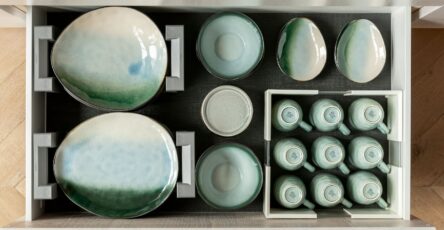
- Everyday plates and mugs
- Frequently worn jackets
- Current shoes
- Daily toiletries
- Common cooking utensils
If you use something every morning, you should not have to move three boxes to reach it.
Move Occasional Items Out of the Way
Secondary storage is a better home for things such as:
- Serving platters
- Specialty appliances
- Extra bedding
- Formal tableware
- Occasional hobby supplies
- Travel accessories
These belongings still deserve proper storage, but they do not need to occupy the easiest locations in the house.
Store Seasonal Items Furthest From Daily Space
Holiday decorations, suitcases, off-season bedding, seasonal sports equipment, and special-event items can usually live in less accessible storage.
Label containers when their contents are not obvious.
That simple step can prevent you from opening five boxes just to find one seasonal item.
Organize for the Person Using the Space
Storage should also make sense for the household.
Children’s everyday belongings may need homes they can realistically reach, while adults’ frequently used items should not require unnecessary effort to access.
At the same time, convenience should never override safety. Heavy, sharp, breakable, chemical, or hazardous items need sensible storage based on their risks and manufacturer guidance.
Home Organization Ideas for Common Problem Areas
The same principles—declutter, assign homes, and prioritize by frequency—can solve very different clutter problems around the house.
Entryway: Stop Clutter at the Door
Entryways often collect:
- Shoes
- Keys
- Bags
- Coats
- Items waiting to leave the house
Try creating a simple landing zone.
You might use:
- A designated place for everyday shoes
- Hooks for frequently used bags and coats
- A small key tray
- An incoming-mail location
- An outgoing basket for returns and errands
Do not create more categories than your household will actually use.
If the problem is limited space, small entryway storage ideas can help you use walls, hooks, and compact storage more effectively.
Kitchen: Keep Work Surfaces Usable
Kitchen organization should support cooking rather than compete with it.
Common problems include:
- Too many appliances on countertops
- Duplicate utensils
- Pantry categories mixed together
- Food containers without matching lids
- Rarely used equipment occupying convenient cabinets
A practical reset could include:
- Keep frequently used appliances accessible.
- Move occasional appliances into secondary storage.
- Group pantry foods by category.
- Store cooking tools near the area where you use them.
- Remove broken or unusable food-storage containers.
- Give container lids a defined home.
When arranging pantry shelves, keep frequently used ingredients easier to reach than items you use only occasionally.
For a larger food-storage reset, a dedicated guide on how to organize a pantry can take this system further.
Bathroom: Control Small-Item Clutter
Bathrooms contain many small products, which can make them feel cluttered quickly.
Common trouble spots include:
- Toiletries covering the vanity
- Backup products mixed with open products
- Hair tools and accessories without clear homes
- Cleaning products competing for cabinet space
Try separating items into simple groups.
For example:
- Everyday toiletries
- Backups
- Hair care
- Grooming tools
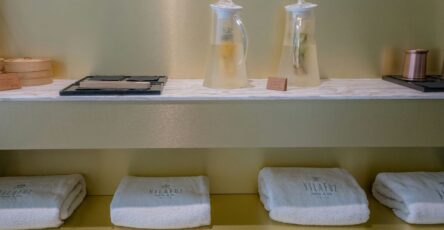
- Towels
- Cleaning supplies where safely appropriate
Drawer dividers can help with very small objects, but they should solve an existing problem rather than create overly specific categories.
Bedroom: Give Clothing Somewhere to Go
One chair can quietly become an entire clothing-storage system.
If worn-but-not-dirty clothes consistently end up there, give that category an intentional location.
Other bedroom organization ideas include:
- Keep only everyday items on the nightstand.
- Give dirty laundry a convenient hamper.
- Group clothes according to how you actually dress.
- Move off-season pieces into secondary storage if necessary.
- Give belts, bags, jewelry, and accessories predictable homes.
The objective is not to make the bedroom look staged. It is to remove the reasons clothing repeatedly ends up on the floor or furniture.
Living Room: Make Shared Items Easy to Return
Shared spaces need particularly simple systems.
Consider creating homes for:
- Remote controls
- Blankets
- Toys
- Chargers
- Books
- Current magazines
A basket beside the sofa may work better for blankets than a complicated storage location across the room.
Likewise, if remote controls repeatedly disappear, one obvious shared location is usually more practical than expecting everyone to remember different drawers.
Home Office and Paper: Separate Storage From Action
Paper clutter is difficult because one pile may contain several completely different kinds of items.
You might have:
- Receipts
- Documents to file
- Tasks that require action
- Reference material
- Paper that can be discarded
Separate the categories.
A simple system could be:
- Incoming
- Action needed
- File or keep
- Shred/recycle as appropriate
This prevents something requiring action from disappearing into a pile of documents you simply need to store.
Quick Home Organization Solutions
Use this table as a starting point when one area keeps becoming cluttered.
| Area | Common Problem | Practical Solution |
|---|---|---|
| Entryway | Shoes, keys, coats, and bags pile up | Create point-of-entry homes with a shoe zone, hooks, key tray, and outgoing basket |
| Kitchen Counters | Everyday and occasional items compete for space | Keep daily-use equipment accessible and move occasional items elsewhere |
| Pantry | Categories become mixed and duplicates are difficult to spot | Group similar items and keep frequently used foods easier to reach |
| Bathroom | Small toiletries cover the vanity | Separate everyday items from backups and use simple drawer or cabinet categories |
| Bedroom | Clothes and accessories collect on furniture | Assign homes for clean, dirty, and wear-again clothing plus accessories |
| Living Room | Shared objects move around constantly | Give remotes, blankets, toys, and chargers simple shared homes |
| Home Office | Mail and documents become one mixed pile | Separate incoming, action, filing, and disposal categories |
| Closet | Rarely used items take the best storage space | Keep current items accessible and move seasonal belongings higher or farther away |
Choose Storage After You Know What You Need
Storage products are tools. They are not a replacement for organization.
Before buying anything, use this order:
- Declutter.
- Group similar belongings.
- Decide where each category belongs.
- Evaluate the available space.
- Add storage products only where they solve a clear problem.
This can save you from buying boxes for belongings you later decide you do not need.
Match the Container to the Problem
Different storage tools solve different problems.
For example:
- Drawer dividers: useful for small loose items
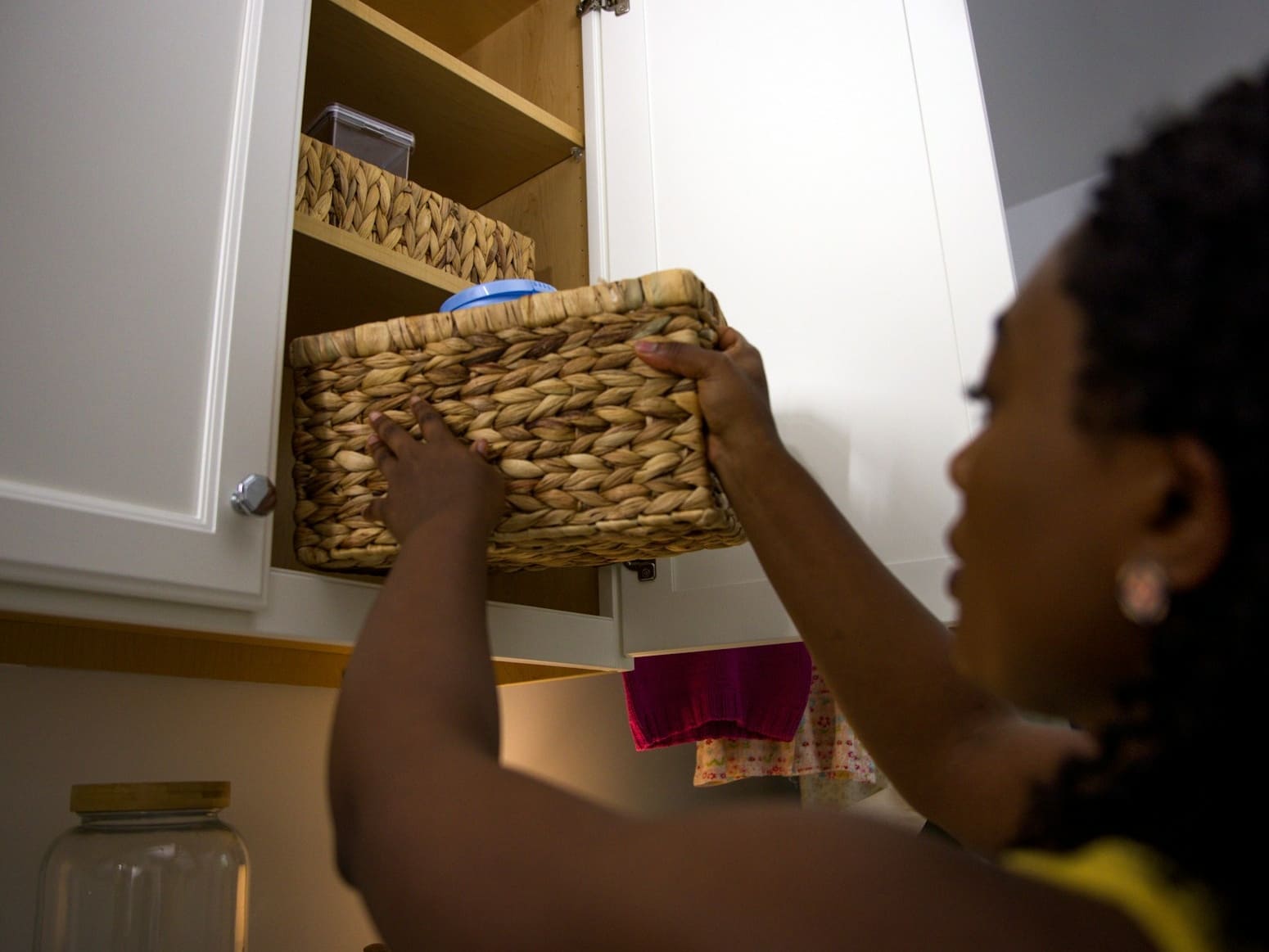
- Open baskets: useful for things that need to be returned frequently
- Lidded boxes: better for less frequently used belongings
- Hooks: practical for grab-and-go items
- Trays: helpful for small objects that migrate across surfaces
- Clear containers: useful when seeing the contents matters
- Labels: helpful when multiple similar containers are stored together
Choose the simplest tool that solves the problem.
Leave Some Breathing Room
A drawer should not require five minutes of rearranging whenever you want to return one object.
The same applies to closets, pantry shelves, and storage boxes.
If every container is packed completely full, maintaining the system becomes harder because new items have nowhere to go.
Leave enough room for belongings to be removed and returned comfortably.
Design Organization Systems That Are Easy to Maintain
An organization system succeeds when people actually use it.
A beautiful storage setup that is too complicated to maintain will eventually stop working.
Make Putting Something Away Easier
Look at where clutter naturally appears.
If dirty clothing always lands on a chair while the hamper is hidden deep inside a closet, consider moving the hamper closer to where clothing is normally removed.
If keys are always placed beside the door while their official location is a drawer across the room, the problem may be the system—not the person using it.
Build storage around real household behavior whenever practical.
Use Simple Categories
You usually do not need categories for:
- Black pens
- Blue pens
- Promotional pens
- Mechanical pencils
A single Writing Tools category may work better.
More detailed categories are useful only when they actually make finding and returning items easier.
Make Shared Systems Obvious
For shared household storage, people should be able to understand:
- Where an item belongs
- What category it belongs to
- How full the storage can become
- What happens when the space is full
If a system requires a long explanation, it may be more complicated than necessary.
Build Small Resets Into Existing Routines
You do not need to reorganize an entire room every night.
Instead, connect small resets to things you already do.
Examples:
- Return living-room items before bed.
- Deal with entryway clutter after coming home.
- Reset kitchen counters after dinner.
- Empty an outgoing or donation box when it becomes full.
Small maintenance sessions help prevent a working system from slowly turning back into clutter.
Prevent Clutter From Returning
Organizing your current belongings solves only part of the problem.
New things will continue entering your home.
Give New Items a Home Immediately
When something new comes in, ask:
- Where will this live?
- Which category does it belong to?
- Is there actually room for it?
- Does something else need to leave?
This keeps new purchases from becoming permanent countertop residents.
Keep a Donation or Outgoing Box
Instead of putting unwanted items back into storage, give them a temporary destination.
A designated box for donations or things that need to leave the home makes it easier to act on those decisions later.
Pay Attention to Repeat Clutter
Repeated clutter is useful information.
If the same objects keep appearing in the same location, ask why.
For example:
Mail always lands on the kitchen counter.
Create an incoming-mail location nearby.
Shoes always collect beside one doorway.
That may be where your everyday shoe storage belongs.
Blankets always stay on the sofa.
A basket beside the sofa may be more practical than storage across the room.
Chargers always gather on one table.
Consider turning that area into an intentional charging location.
Instead of repeatedly clearing the same pile, change the system that allows the pile to form.
Common Home Organization Mistakes
Buying Storage Before Decluttering
Containers can make unnecessary belongings look organized without actually solving the problem.
Use this order instead:
Declutter → assign homes → choose storage.
Storing Things Where They Fit Instead of Where They’re Used
An empty cabinet is not automatically the right cabinet.
Whenever practical, store things close to the activities they support.
Giving Prime Space to Rarely Used Items
If holiday serving dishes occupy your easiest kitchen shelf while the plates you use every day are difficult to reach, the storage priorities are backwards.
Organize according to frequency of use.
Making Categories Too Complicated
A system nobody remembers will not stay organized.
Choose broad, obvious categories unless more detail genuinely improves usability.
Overfilling Storage
Do not pack every shelf, box, and drawer so tightly that returning one item requires rearranging everything.
Usable storage needs some working room.
Hiding Clutter Instead of Organizing It
Moving everything from a countertop into one miscellaneous basket creates a cleaner-looking counter, but it does not answer where those belongings actually belong.
Trying to Organize the Entire House at Once
Start with one defined zone.
Finish it, observe how the new system works, and move to the next area.
A completed drawer or cabinet is more useful than six half-organized rooms.
Keep Organization Safe and Practical
Good organization should make your home easier to use without creating new hazards.
Keep normal walking routes, doors, and exits clear rather than using them as overflow storage.
Be thoughtful about where you place:
- Heavy objects
- Sharp items
- Breakable belongings
- Chemicals
- Tools
- Items accessible to children or pets
Rarely used does not automatically mean “store it on the highest shelf.”
Follow appropriate manufacturer and safety guidance where weight, installation, hazardous products, or child safety are involved.
Likewise, avoid using ovens, stovetops, or areas near heat-producing appliances as convenient overflow storage.
A Simple Order for Organizing Any Space
When you are unsure where to start, follow the same sequence:
- Choose one manageable area.
- Remove trash and items that belong elsewhere.
- Decide what you genuinely want to keep.
- Group similar belongings.
- Assign each category a logical home.
- Give frequently used items the easiest storage positions.
- Move occasional and seasonal items into secondary storage.
- Add containers only when they solve a specific problem.
- Label storage where it genuinely helps.
- Watch what happens and adjust the system if clutter returns.
The final step matters.
Organization is not necessarily finished when the shelf looks good. It is finished when the system continues making sense during everyday life.
Conclusion
The best home organization ideas are not about filling your house with matching containers or creating a complicated system for every drawer.
They make normal life easier.
Start with a simple framework:
Reduce → group → assign a home → prioritize by use → maintain.
Declutter before buying storage. Keep everyday belongings close to where you use them. Move occasional items away from prime space. Give temporary clutter somewhere to go. Most importantly, pay attention when the same clutter returns, because that is often a sign the system needs adjusting.
You also do not need to reorganize the whole house today.
Choose one frustrating area—a kitchen counter, entryway, bathroom drawer, paper pile, or chair covered in clothes—and ask:
What would make putting these things away easier than leaving them here?
Start there.
Frequently Asked Questions
What Are the Best Home Organization Ideas for Everyday Life?
Start by decluttering before adding storage. Give retained items logical homes, keep belongings near where they are used, reserve convenient storage for frequently used items, and use simple categories that are easy to maintain. Temporary items such as mail, returns, and donations should also have designated places.
How Do I Organize My House When I Have Too Much Stuff?
Start with one small area rather than the whole house. Separate items into keep, move, donate, sell, recycle, and appropriate disposal categories. Reduce the volume first, then decide where the remaining belongings should live.
Where Should Frequently Used Items Be Stored?
Keep everyday items close to where they are used and in convenient positions such as easy-to-reach shelves or the front of drawers. Occasional and seasonal belongings can generally move to less accessible secondary storage when it is safe to do so.
Should I Buy Storage Bins Before Organizing?
Usually, no. First decide what you are keeping, group similar belongings, and assign them locations. Once you understand the storage problem, you can determine whether you actually need a basket, box, drawer divider, tray, hook, or another solution.
How Do You Keep a House Organized Long Term?
Make your systems easy to use. Keep item homes obvious, avoid overfilling storage, deal with incoming belongings promptly, reset high-use areas regularly, and change any system that repeatedly produces the same clutter.
What Should I Organize First?
Start with a small area that creates frequent inconvenience, such as your entryway, kitchen counter, junk drawer, bathroom vanity, paper pile, or the bedroom chair that collects clothing. Completing one manageable area is usually easier than trying to reorganize your entire home at once.