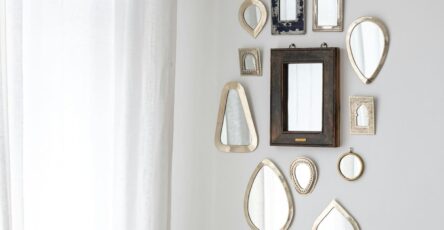


A room can be beautifully furnished and still feel strangely cold. The furniture may be pushed against the walls, one bright ceiling light does all the work, hard surfaces dominate, and decorative objects feel scattered rather than connected.
At the other extreme, trying too hard to make a room feel cozy can create a different problem. Too many cushions, blankets, baskets, candles, and accessories can make the space feel crowded instead of comfortable.
The most useful cozy home décor ideas are about balance. Softer lighting, comfortable textiles, natural materials, better furniture placement, meaningful details, and enough open space can make a home feel warmer without overwhelming it.
A practical approach is:
Arrange → light → soften → layer → naturalize → personalize → edit
Start With Lighting Before Buying More Décor
Lighting changes how every color, texture, and material in the room appears.
Before adding more decorations, look at how the room feels after daylight fades.
Replace the One-Light Approach
If one bright ceiling fixture does all the work, the room may feel flat at night.
Consider combining:
- General ceiling lighting
- Floor lamps
- Table lamps
- Reading lights
- Small accent lamps
Different light sources allow you to change the atmosphere according to what you are doing.
For example:
- Ceiling lighting for general use
- Floor lamp beside the sofa
- Table lamp for a softer evening glow
- Reading light beside a chair
The goal is not to make the room dark. It is to have more control.
Understand Warm and Cool Light
Light appearance is often described by color temperature, measured in Kelvin.
Lower Kelvin values look warmer or more yellow, while higher values appear cooler or bluer.
Warm-white or soft-white lighting is commonly found around 2700–3000K, but that does not mean every lamp in your home has to use exactly the same temperature.
A reading or task area may have different needs from a quiet living room.
Use the appearance that works for the activity and atmosphere you want.
Put Light Where People Actually Need It
Instead of lighting the room evenly from above, think about activities.
For example:
- Reading chair → nearby lamp
- Sofa → floor or side-table lamp
- Dining table → appropriate overhead light
- Console → small accent lamp
When lighting follows the way the room is used, the space often feels more intentional.
Use Dimming Only With Compatible Equipment
A dimmer can help a room transition between:
- General use
- Reading
- Entertaining
- Quiet evening time
But not every bulb, fixture, and dimmer combination works together.
Check the product information before assuming a bulb is dimmable.
Use Daylight Too
Before buying another lamp, look at:
- Where daylight enters
- Whether curtains block too much of it
- Whether glare needs softening
- How the room changes throughout the day
Natural light can make textures and materials look completely different from artificial light.
Add Warmth With Textiles
Textiles are one of the easiest ways to soften a room without changing large furniture.
Start With the Biggest Textile Surfaces
Consider:
- Rugs
- Curtains
- Bedding
- Upholstery
These have more visual impact than several small accessories.
A rug can soften a hard floor. Curtains can make a wall feel less bare. Bedding can change the entire feeling of a bedroom.
Add Throws and Cushions Selectively
A few soft additions can make seating more inviting.
Examples include:
- Throw over a sofa arm
- Cushion on a reading chair
- Blanket at the end of a bed
- Small basket for folded throws
The key is restraint.
If you have to remove half the cushions before sitting down, the room may be layered beyond what is practical.
Mix Textures
Instead of buying everything in the same fabric, combine different textures.
Possible combinations include:
- Smooth cotton
- Linen
- Wool where suitable
- Knitted textiles
- Woven fibers
- Plush surfaces
A room with several related textures often feels more interesting than one filled with the same fuzzy material.
Layer Rugs Only When It Helps
Overlapping rugs can:
- Add texture
- Define a seating area
- Soften a large hard floor
But layered rugs are optional.
If one appropriately sized rug already anchors the room well, another may only add visual noise.
Think About Maintenance
The coziest textile is not necessarily the one that looks softest in a photograph.
Also consider:
- Pets
- Children
- Cleaning
- Care labels
- High-traffic areas
- Personal sensitivities
A difficult-to-maintain fabric can make the room less comfortable in everyday life.
Layer the Room Without Overdecorating It
Layering does not mean filling every available surface.
A useful approach is to think in large, medium, and small layers.
Start With Large Layers
These may include:
- Rug
- Curtains
- Sofa
- Bed
- Large artwork
Get these elements working together before focusing on small decorative details.
Add Medium Layers
Examples include:
- Lamps
- Cushions
- Throws
- Baskets
- Side tables
These create depth without becoming tiny visual clutter.
Finish With Small Details
Only then consider:
- Books
- Vase
- Bowl
- Framed photograph
You may find that the room needs fewer small objects than expected.
Repeat a Few Elements
Repeating one or two colors or materials can make the room feel more connected.
For example:
- Similar wood tones in a side table and picture frame
- Matching metal tones in a lamp and hardware
- Accent color repeated in artwork and a cushion
The goal is connection rather than perfect matching.
Leave Negative Space
Do not fill every:
- Shelf
- Table
- Corner
- Wall
Open areas help the pieces you do use stand out.
Choose One or Two Focal Points
Possible focal areas include:
- Fireplace
- Artwork
- Sofa group
- Window
- Bed
- Bookcase
If every surface is trying to become the focal point, the room can feel restless.
Bring in Natural Materials
Natural materials can soften rooms dominated by smooth painted surfaces, metal, or glass.
Add Wood
Possible additions include:
- Side table
- Stool
- Wooden frame
- Tray
- Furniture top
You do not need to replace everything with matching wood furniture.
One or two wood elements may be enough.
Add Woven Materials
Depending on your style, consider:
- Rattan
- Jute
- Seagrass
- Woven baskets
- Natural-fiber rugs where suitable
These introduce additional texture without requiring a large furniture purchase.
Use Ceramic or Stone as Small Accents
Possible additions include:
- Vase
- Bowl
- Planter
- Lamp base
These create material contrast with soft textiles and wood.
Mix Instead of Match
A combination such as:
wood + linen + woven basket + ceramic
can feel more relaxed than a complete matching decorative collection.
Keep the Claims Visual
Natural materials can add texture and visual warmth.
That does not mean they automatically:
- Improve health
- Purify air
- Reduce stress
Keep the benefit here focused on design unless a separate claim is properly supported.
Arrange Furniture to Make the Room More Inviting
Furniture placement can completely change how welcoming a room feels without costing anything.
Arrange Around the Main Activity
Ask what the room is mainly used for:
- Conversation
- TV
- Reading
- Entertaining
- Combination
Then arrange seating accordingly.
Don’t Automatically Push Everything Against the Walls
In some rooms, bringing furniture slightly inward can create a more defined seating group.
A sofa and two chairs angled toward each other may feel more conversational than every seat facing a different wall.
This depends on the size and shape of the room.
Give the Seating a Shared Anchor
Possible anchors include:
- Coffee table
- Rug
- Fireplace
- Artwork
- Window view
A rug can be particularly useful for visually connecting several pieces of furniture into one zone.
Keep Movement Easy
A cozy room should still be easy to walk through.
Avoid arrangements that force people to:
- Squeeze behind chairs
- Step around decorative items
- Walk through narrow gaps
- Climb over furniture
Comfort includes circulation.
Use Movable Pieces
Flexible furniture can be useful when the room serves several purposes.
Examples include:
- Stool
- Pouffe
- Lightweight chair
- Nesting table
You can move them when guests arrive or when the room needs more open space.
Make the Bedroom Cozy With Fewer, Better Layers
A bedroom does not need a mountain of pillows to feel comfortable.
Start With Bedding
Build from practical layers:
- Sheets
- Main bedding
- One throw
- Pillows you actually use
Decorative cushions can be added, but avoid making the bed difficult to use every night.
Add Bedside Lighting
A bedside lamp can make evening use more comfortable than depending entirely on a strong ceiling light.
It also places light where you need it.
Use Curtains to Soften the Room
Curtains can add:
- Texture
- Visual height
- Privacy
- Light control
If you need blackout or thermal performance, check the actual product specifications rather than assuming all heavy curtains perform the same way.
Keep the Nightstand Functional
Leave enough room for items such as:
- Lamp
- Book
- Glass of water
- Small personal object
A nightstand completely covered in décor may look styled but becomes inconvenient.
For more bedroom-specific ideas, see Bedroom Décor Ideas for a Calm and Comfortable Space.
Use Scent Carefully
Scent can be part of the atmosphere, but it should remain optional.
Remember That Fragrance Is Personal
One person may enjoy a fragrance that another finds unpleasant or irritating.
Some fragrance-sensitive individuals can experience adverse effects, so the most inviting choice may sometimes be:
- Less fragrance
- No added fragrance
The people using the room matter more than creating a permanent “signature scent.”
Avoid Stacking Multiple Fragrance Sources
You usually do not need all of these running at the same time:
- Scented candle
- Diffuser
- Plug-in
- Room spray
- Wax warmer
A subtle approach is easier to adjust.
Treat Candles as Open Flames
A candle is not only décor.
If you use real candles:
- Place them in stable holders
- Keep them away from combustible materials
- Extinguish them before leaving
- Extinguish them before sleeping
Avoid placing lit candles close to:
- Curtains
- Throws
- Bedding
- Books
- Dried decorative material
Consider Flameless Candles
Battery-operated flameless candles can add visual glow without an open flame.
They are useful when you want candle-like atmosphere without using a burning candle.
Control Clutter So Cozy Doesn’t Become Crowded
A room can feel lived-in without every possession being visible.
Separate Display From Storage
Good display items might include:
- Favorite books
- Framed photographs
- Artwork
- One meaningful collection
- A few decorative pieces
Less attractive everyday items can go into closed storage.
Mix Open and Closed Storage
Open storage works for things you want to see.
Closed storage works well for:
- Cables
- Chargers
- Games
- Paperwork
- Everyday miscellaneous objects
This creates a balance between personality and visual calm.
Use Baskets for Specific Jobs
Useful examples include:
- Throws
- Toys
- Reading material
- Small electronics
Avoid buying decorative baskets with no defined purpose.
Clear the Main Visual Surfaces
Pay particular attention to:
- Coffee table
- Dining table
- Console
- Floor
- Surfaces visible from adjoining rooms
These do not need to be empty.
They simply should not become dumping zones.
Leave Some Shelves Partly Empty
A shelf can contain:
- Books
- One object
- Open space
instead of being completely filled from edge to edge.
For broader decluttering ideas, see Smart Storage Ideas for Small Spaces That Actually Reduce Clutter.
Add Personal Objects Without Turning the Room Into a Display Case
A cozy home should feel personal rather than staged.
Choose Meaningful Objects
Examples include:
- Family photograph
- Travel object
- Favorite books
- Handmade piece
- Artwork you genuinely like
Group Small Items
Instead of scattering many small items around the room, group selected pieces on a:
- Tray
- Shelf
- Console
- Bookcase section
This makes the arrangement feel more intentional.
Rotate Seasonal Décor
If you enjoy seasonal decorating, rotate items rather than adding each new season permanently to what is already there.
Store part of the collection and bring it out when relevant.
Keep Practical Surfaces Practical
If a table cannot hold a:
- Drink
- Book
- Laptop
because it is completely covered in accessories, the décor is interfering with the furniture’s purpose.
Make the Home Feel Cozier Without Spending Much
A warmer room does not necessarily require shopping.
Rearrange First
Try:
- Turning chairs toward the sofa
- Pulling the seating into a group
- Moving a lamp beside a reading chair
- Repositioning the rug
before buying anything.
Move Décor Between Rooms
An existing:
- Lamp
- Basket
- Throw
- Side table
- Artwork
may work better somewhere else.
Check What You Already Own
Look through existing:
- Throws
- Cushion covers
- Curtains
- Storage baskets
before buying replacements.
Remove Before You Add
Sometimes the most effective change is removing:
- Extra side table
- Excess cushions
- Unused decorative basket
- Several small accessories
This gives the remaining pieces more impact.
For more budget-friendly ideas, see Home Décor Ideas on a Budget That Still Look Good.
Cozy Home Décor Ideas at a Glance
| Room Feels… | Try This | Why It Helps | Watch Out For |
|---|---|---|---|
| Harsh at night | Add lower-level lamps | Gives you more lighting flexibility | Bulb and fixture compatibility |
| Cold or flat | Add rug, curtains, or throw | Creates textile layers | Too many competing fabrics |
| Too hard or sleek | Add wood or woven material | Adds material contrast | Buying only for trend |
| Disconnected | Repeat a few colors or materials | Creates visual continuity | Matching everything |
| Uninviting | Reorient seating | Encourages connection | Blocking circulation |
| Too empty | Add one or two meaningful layers | Adds personality | Filling every surface |
| Too busy | Use closed storage | Reduces visual clutter | Hiding things without organizing |
| Overdecorated | Remove small accessories | Gives focal pieces more space | Removing all personality |
| Impersonal after dark | Use warmer-appearance lighting | Changes evening atmosphere | Assuming one setting suits every task |
| Missing atmosphere | Optional subtle scent or flameless candle | Adds another sensory or visual layer | Fragrance sensitivity or fire risk |
Cozy décor works best as a combination of light + texture + arrangement + meaningful objects + editing, not as a shopping category.
Common Cozy Decorating Mistakes
Using One Bright Overhead Light
A single light source gives you little control over the evening mood.
Treating Warm Light as One Mandatory Number
Lower color temperatures appear warmer, but the best choice still depends on:
- Activity
- Room
- Personal preference
Adding Too Many Cushions and Throws
The sofa should still be comfortable to sit on.
Mixing Too Many Unrelated Textures
Texture should create depth, not competition.
Automatically Pushing Furniture Against Walls
Furniture placement should respond to:
- Room size
- Circulation
- Conversation
- TV use
- Views
Blocking Movement to Create an “Intimate” Layout
A room that is difficult to move through does not feel comfortable.
Filling Every Shelf
Leave some empty visual space.
Confusing Clutter With Personality
Meaningful belongings can remain visible while everyday clutter stays contained.
Using Too Much Fragrance
More fragrance does not automatically make a room more welcoming.
Treating Candles Casually
Real candles are open flames and should be kept away from combustible items.
Buying a Complete “Cozy” Look at Once
A room often feels more natural when it develops from:
- Existing furniture
- Meaningful objects
- Several complementary materials
rather than a single matching collection.
Make a Home Feel Cozy in the Right Order
If a room feels cold or unfinished, use this sequence.
Step 1: Identify the Problem
Does the room feel:
- Harsh?
- Empty?
- Cold?
- Cluttered?
- Difficult to use?
Step 2: Rearrange the Furniture
Improve:
- Conversation
- Circulation
- Focal point
before shopping.
Step 3: Improve the Lighting
Add a suitable:
- Table lamp
- Floor lamp
- Reading light
where needed.
Step 4: Add One Large Textile Layer
Choose one such as:
- Rug
- Curtains
- Bedding
Step 5: Add Smaller Soft Layers
Consider:
- Throw
- Cushions
- Small textile accents
Step 6: Add One or Two Natural Materials
For example:
- Wood
- Woven fiber
- Ceramic
- Stone
Step 7: Edit Visible Clutter
Decide what should be:
- Displayed
- Stored
- Removed
Step 8: Add Personal Details
Use meaningful:
- Art
- Books
- Photographs
- Objects
Step 9: Add Scent Only if Everyone Enjoys It
Keep fragrance restrained and optional.
Step 10: Review the Room at Night
Check:
- Lighting
- Shadows
- Furniture placement
- Clutter
- Comfort
Remember:
Arrange → light → soften → layer → naturalize → personalize → edit
Maintain a Cozy Home Without Constantly Adding More
A room does not need a new decorative layer every season.
Reset the Main Surfaces
Regularly clear:
- Coffee table
- Dining table
- Console
- Floor
Return Textiles to Their Place
Give throws and cushions a defined home, such as:
- Sofa
- Basket
- Storage bench
Rotate Seasonal Textiles
You can change:
- Cushion covers
- Throws
- Bedding
without changing the whole room.
Edit When Something New Comes In
When you add a decorative object, consider whether something else should:
- Move
- Be stored
- Leave the room
Move Lighting With Your Routine
If you move a reading chair, the lamp that served it may need to move too.
The room should change with the way you use it.
Frequently Asked Questions About Cozy Home Décor
What Are the Best Cozy Home Décor Ideas?
Start with:
- Layered lighting
- Rugs and textiles
- Natural materials
- Comfortable furniture arrangement
- Meaningful objects
- Controlled clutter
Lighting and furniture placement often deserve attention before you buy several small accessories.
What Lighting Makes a Room Feel Warmer?
Lower-color-temperature light appears warmer than higher-color-temperature light.
Warm or soft-white light is commonly found around the 2700–3000K range.
That does not mean every fixture in every room needs to use the same color temperature.
Choose based on the activity and mood you want.
How Do I Make a Living Room Feel Cozy Without Clutter?
Use:
- One defined seating group
- Layered lighting
- Rug
- A few cushions or throws
- Selective display
- Closed storage for everyday clutter
The goal is to combine softness and personality with enough open space.
How Do I Make a Minimalist Room Feel Cozier?
Add texture rather than quantity.
Consider:
- Rug
- Curtains
- Wood
- Woven material
- Warm-appearance lamp
- One throw
You can keep the room visually simple.
Do Natural Materials Make a Room Feel Cozier?
They can add visual and tactile contrast.
Materials such as:
- Wood
- Rattan
- Linen
- Jute
- Ceramic
can help break up rooms dominated by hard, smooth surfaces.
Keep the benefit focused on design rather than health claims.
How Should I Arrange Furniture for a Cozy Living Room?
Arrange seating according to how the room is actually used.
For conversation, create a defined seating group and maintain clear movement routes rather than automatically placing every piece against a wall.
Do I Need Candles?
No.
You can create warmth with:
- Table lamps
- Floor lamps
- Compatible dimmable lighting
- Flameless candles
If you use real candles, treat them as open flames and follow fire-safety guidance.
Is Home Fragrance Necessary?
No.
Scent is optional, and individual sensitivity varies.
A fragrance-free room can be just as warm and inviting.
Conclusion
The best cozy home décor ideas are not about filling a room with more things.
They come from the right combination of:
- Light
- Texture
- Furniture arrangement
- Natural materials
- Personal details
- Breathing room
Use:
Arrange → light → soften → layer → naturalize → personalize → edit
Start with the room’s lighting before buying more decorative objects. Add rugs, curtains, throws, and cushions to soften hard surfaces, but stop before the seating becomes difficult to use.
Bring in wood, woven fibers, ceramic, or stone for additional texture. Arrange furniture so people can comfortably use the room together, while keeping movement routes open.
Display meaningful objects selectively and use closed storage for everyday visual clutter. Treat fragrance as optional, and use candles carefully if you choose real flames.
Most importantly, keep editing.
A cozy home should feel comfortable and lived-in, not crowded.
Choose one room tonight and make three changes before buying anything: turn off the strongest overhead light and use existing lamps, move the seating into a more comfortable arrangement, and clear a few objects from the busiest visible surface.