
A small bedroom can become difficult surprisingly quickly. The bed takes up most of the floor, the wardrobe needs room to open, a nightstand blocks the path, and adding one more dresser can make the room feel more like furniture storage than a place to rest.
The best small bedroom ideas are not simply about buying smaller versions of everything. A limited room works better when you plan the largest pieces first, protect the routes you need to walk through, use storage already built into essential furniture, and make every additional piece justify the space it uses.
A useful order is:
Measure → place the bed → protect movement → add storage → use walls → light → simplify → test
Start with function. Once the room works properly, decorating it becomes much easier.
Start With the Bed Because It Controls the Layout
The bed is usually the largest object in the room.
That means its position determines how much usable space remains for:
- Walking
- Dressing
- Wardrobe access
- Bedside storage
- Other furniture
Instead of placing the wardrobe, dresser, and nightstands first, test the bed in the realistic positions available.
Test the Main Walls
Depending on the room, the bed might work:
- Centered on a suitable wall
- Shifted toward one side
- Under a window where practical
- Along one side of a particularly narrow room
- Inside an alcove
- Below a sloped ceiling if the bed safely fits
There is no single correct arrangement for every bedroom.
The right position is the one that allows the room to function.
Prioritize Access Over Perfect Symmetry
A centered bed can look balanced, but it may be a poor layout if it:
- Blocks a wardrobe
- Creates a narrow route from the door
- Leaves no usable wall for storage
- Makes a dresser impossible to open
Symmetry is useful only when it does not interfere with the room.
In a small bedroom, an offset bed with one compact bedside surface may work better than a perfectly centered bed with two large nightstands.
Decide Whether You Need Access From Both Sides
For a bedroom shared by two people, reaching both sides of the bed may be useful.
For a single occupant in a very narrow room, moving one side closer to a wall may create valuable space elsewhere.
Treat this as a practical tradeoff rather than a universal rule.
Measure the Actual Bed Frame
Do not plan around mattress dimensions alone.
Remember that:
- Bed frames may extend beyond the mattress
- Headboards add depth
- Bedding projects beyond the sides
- Built-in drawers need room to open
- Lift-up storage may need overhead or side clearance
Use the actual dimensions of the bed you own or plan to buy.
Measure the Room Before Choosing Furniture
Small rooms are much less forgiving when furniture is only slightly too large.
A cabinet that would be fine in a larger bedroom can make a small one frustrating to use.
Measure More Than the Walls
Record:
- Room width
- Room length
- Door position
- Window position
- Wardrobe openings
- Radiators or fixed equipment
- Alcoves
- Ceiling slopes
- Electrical outlets
These details affect where furniture can realistically go.
Measure Furniture While It Is Being Used
The closed dimensions do not tell the whole story.
Account for:
- Dresser drawers
- Wardrobe doors
- Storage-bed drawers
- Desk chairs
- Bench lids
- Bedroom doors
A dresser may technically fit between the wall and bed while becoming useless because its drawers cannot fully open.
Mark Furniture Before Buying
One simple approach is to use removable tape or paper to mark the furniture footprint on the floor.
Then move through the room normally.
Ask:
- Can I walk beside the bed comfortably?
- Can the wardrobe open?
- Can the drawers extend?
- Can I stand where I need to dress?
- Is the room door still easy to use?
This simple test can prevent buying furniture that fits on paper but fails in real life.
Choose Furniture Scale Based on the Room
A small bedroom does not necessarily need miniature furniture.
It needs the right amount of furniture.
Let the Bed Be the Main Large Piece
A room can quickly become overloaded when it contains:
- Large bed
- Large wardrobe
- Wide dresser
- Two large nightstands
- Bench
- Armchair
Choose which pieces genuinely need to be substantial.
The bed is usually one of them.
Everything else should earn its space.
Reduce the Number of Separate Pieces
A small room may work better with:
- One good wardrobe instead of wardrobe plus dresser
- One bedside unit instead of two where appropriate
- Wall shelf instead of floor nightstand
- Storage bed instead of separate blanket chest
Fewer furniture pieces can improve both movement and visual calm.
Look for Narrower or Shallower Options
A narrow piece may be useful for:
- Bedside storage
- Books
- Dressing accessories
- Small personal items
But do not choose something so small that it becomes impractical.
A slightly larger piece with enough capacity may be better than several tiny units that collectively take up more floor space.
Use Storage Furniture That Works With the Bed
Storage is important in a small bedroom, but adding another cabinet is not always the answer.
Start by using the furniture you already need.
Consider a Bed With Built-In Storage
Depending on the design, a bed may include:
- Drawers
- Lift-up storage
- Headboard shelves
This can combine sleeping and storage in the same footprint.
That may reduce the need for:
- Blanket chest
- Additional cabinet
- Extra shelf
Check the exact manufacturer’s dimensions, load limits, and clearance requirements.
Use Under-Bed Space Before Adding Another Cabinet
Lower-frequency items may include:
- Seasonal clothing
- Spare bedding
- Shoes
- Travel items
Keeping these under the bed can free your most accessible storage for daily use.
For a more detailed system, see Bedroom Storage Ideas for a Cleaner, Less Cluttered Room.
Ask Whether You Really Need a Dresser
Before adding one, check whether:
- Wardrobe interiors can be improved
- Under-bed storage can handle seasonal items
- Wall storage can handle smaller categories
A dresser is useful when it solves a real storage problem.
It is less useful when it simply fills an empty wall.
Use Closed Storage for Visual Calm
Open storage can make belongings easy to reach, but it also keeps everything visible.
Closed storage can hide:
- Clothing
- Cables
- Personal items
- Miscellaneous belongings
Use open shelves more selectively for a small number of useful or decorative pieces.
Move Bedside Functions Off the Floor When Necessary
A traditional nightstand is convenient, but it is not mandatory.
Use a Wall Shelf
A compact wall-mounted shelf may provide enough room for:
- Phone
- Glasses
- Book
- Small bedside essentials
This can free floor space beside the bed.
Move Lighting Onto the Wall
A wall-mounted or suspended bedside light can free:
- Nightstand surface
- Floor area
This can be particularly useful where the bedside space is very narrow.
If electrical installation is required, follow the manufacturer’s instructions and use qualified electrical help where appropriate.
Use One Bedside Unit Instead of Two
If the bedroom is used by one person or the layout is asymmetric, one bedside surface may be enough.
The extra space could improve:
- Circulation
- Wardrobe access
- Storage elsewhere
Perfect symmetry is optional.
Keep Bedside Storage Focused
The bedside area should support:
- Sleeping
- Reading
- Essential personal items
Avoid turning the wall beside the bed into another crowded storage zone.
Use the Walls Before Filling the Floor
Vertical space can help a small bedroom work much harder.
Add Wall-Mounted Storage Selectively
Possible options include:
- Shelves
- Small cabinets
- Hooks
- Pegboards
- Wall rails
These can hold belongings without using additional floor area.
Store Lower-Frequency Items Higher
Higher storage can suit:
- Spare bedding
- Seasonal accessories
- Travel items
Daily essentials should stay easier to reach.
Consider One Concentrated Storage Wall
Instead of placing several small cabinets around the room, you may be able to create one stronger storage zone.
For example:
- Wardrobe
- Closed upper storage
- Small integrated desk
can occupy one wall while leaving other parts of the room more open.
Whether this works depends on the room shape.
Don’t Cover Every Wall
Using vertical space does not mean every wall needs shelves.
A bedroom can still feel crowded when all the floor is clear but every wall is visually overloaded.
Mix:
- Closed cabinets
- Boxes
- Limited open shelving
and preserve some empty wall space.
Anchor Tall Storage Properly
Using height efficiently can increase storage, but tall furniture also needs to be stable.
Secure Tall or Top-Heavy Furniture
Dressers, bookcases, and other tall storage should be anchored according to the manufacturer’s instructions.
Do not improvise the anchoring system.
Different walls may require different:
- Screws
- Anchors
- Wall plugs
- Brackets
Keep Heavier Items Lower
Where appropriate, store heavier belongings in lower drawers or shelves.
This can also make them easier to handle.
Think About Children
If children live in or regularly visit the home, avoid placing attractive objects high on furniture where they might encourage climbing.
A space-saving layout should still prioritize safe use.
Use Lighting to Free Surfaces and Improve the Room
Lighting can improve both function and atmosphere without requiring much floor space.
Use More Than One Light Source
Consider a combination of:
- General ceiling light
- Bedside light
- Reading light
- Wardrobe or task light where suitable
One bright ceiling fixture may provide general illumination, but a bedside or task light is often more useful for evening activities.
Choose Wall or Pendant Lighting Where Space Is Tight
If the nightstand is very small, moving the lamp off the surface can leave more room for:
- Phone
- Glasses
- Water
- Book
Lighting can therefore solve a storage problem as well as a visibility problem.
Choose Light Appearance Intentionally
Lower color temperatures appear warmer, while higher ones appear cooler.
For a bedroom where you want a softer evening atmosphere, warmer-appearance light may be a good fit.
That does not mean every fixture must use the same color temperature.
Choose lighting based on both mood and activity.
Keep Daylight Available
Avoid blocking windows unnecessarily with:
- Large wardrobes
- Tall cabinets
- Excess objects
You may still need curtains or other treatments for:
- Privacy
- Sleep
- Glare control
The goal is to preserve the useful daylight while meeting those needs.
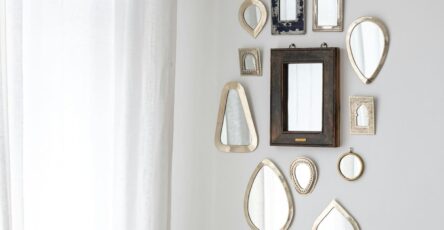
Use Mirrors for Function First
A mirror can:
- Help with dressing
- Reflect available light
- Add visual depth
A full-length mirror beside or near the wardrobe can serve a practical function without adding a bulky piece of furniture.
Make sure it is mounted or positioned according to the product instructions.
Choose Color Based on the Effect You Want
A small bedroom does not have to be white.
Color should support the atmosphere you want.
Light Colors Can Feel More Open
Possible directions include:
- Off-white
- Pale neutral
- Light blue
- Soft green
- Muted warm tone
Lighter shades can create a brighter, more open visual impression.
They can be especially useful when the room already receives limited daylight.
Dark Colors Can Still Work
You may prefer a bedroom that feels:
- Moody
- Cocooning
- Dramatic
- Intimate
Darker shades can support that direction.
The goal does not always have to be making the room appear as large as possible.
Think About the Ceiling
A lighter ceiling can sometimes reinforce a more open or taller visual impression.
But again, this is a design choice, not a rule.
Test Paint in the Actual Room
Color changes depending on:
- Daylight
- Window direction
- Artificial lighting
- Flooring
- Furniture
- Bedding
Test samples in the bedroom before committing to the whole wall.
Keep the Palette Controlled if You Want Calm
A restrained palette can reduce competition between:
- Walls
- Bedding
- Furniture
- Storage
- Artwork
This does not mean everything must match.
You can still add contrast without using many unrelated colors.
Reduce Visual Clutter as Well as Physical Clutter
A room can technically have enough floor space and still look cramped.
Visible clutter matters too.
Keep Main Surfaces Relatively Clear
Focus on:
- Nightstand
- Dresser top
- Window sill
- Floor
These areas do not need to be empty.
They should simply have a purpose.
Hide Everyday Visual Noise
Closed storage is useful for:
- Cables
- Spare toiletries
- Folded clothing
- Personal items
- Miscellaneous belongings
When too many small things remain visible, the room can feel busier than it actually is.
Limit Small Decorative Objects
A compact room already contains several strong visual elements:
- Bed
- Bedding
- Storage
- Lighting
- Artwork
A large number of small decorations may make all of those elements compete.
Choose fewer objects intentionally.
Group Artwork
Instead of scattering small pieces over every wall, consider one stronger grouping.
This creates a clearer focal area.
Keep Bedding Practical
A few decorative pillows or a throw can add texture.
But if you need to remove a large pile every night, the styling may be creating unnecessary work and visual clutter.
For more room-wide organization ideas, see Home Organization Ideas That Make Daily Life Easier.
Choose Multifunctional Furniture That Replaces Something Else
Multifunctional furniture is useful when it genuinely reduces the number of pieces you need.
Storage Bed
Combines:
- Sleeping
- Storage
This can eliminate the need for another chest or cabinet.
Headboard With Shelves
Can provide:
- Bedside storage
- Book space
- Small display area
and may reduce the need for larger nightstands.
Daybed or Bed That Doubles as Seating
In a single-person room, some beds can also provide a daytime place to sit.
This can be useful if the bedroom has to serve more than one function.
Integrated Desk
Where the bedroom also needs to function as a:
- Study area
- Home office
- Dressing space
a desk integrated into wall storage may use space more efficiently than another large freestanding unit.
Storage Bench
A storage bench can combine:
- Seating
- Bedding storage
but only if the room has enough floor space.
If it blocks the bed or becomes a permanent clothing pile, it is not saving space.
Ask Whether Both Functions Matter
“Multifunctional” does not automatically mean space-saving.
The piece should replace another need.
If it simply adds another object to the room, it may make the space worse.
Small Bedroom Ideas at a Glance
| Small-Bedroom Problem | Better Approach | Why It Helps | Watch Out For |
|---|---|---|---|
| Bed dominates the room | Plan bed position first | Establishes a usable layout | Blocking wardrobe or doors |
| Too many furniture pieces | Remove or combine functions | Frees floor area | Losing storage you really need |
| No bedside space | Wall shelf or compact unit | Preserves floor space | Shelf load and mounting |
| Not enough storage | Bed-integrated storage | Uses existing footprint | Drawer or lift clearance |
| Empty wall space | Vertical storage | Adds capacity without a wide footprint | Anchoring and load |
| Room feels visually busy | Use more closed storage | Reduces visible clutter | Hiding unsorted belongings |
| Room feels dark | Improve lighting and daylight access | Makes the room easier to use | Privacy and sleep needs |
| Room feels visually cramped | Use a controlled palette or lighter tones where desired | Can create a more open effect | Assuming light colors are mandatory |
| Large dresser crowds room | Taller, narrower, or integrated storage | Preserves floor width | Furniture stability |
| Bedroom also needs workspace | Integrated or multifunctional piece | Combines functions | Overloading the room |
The best small-bedroom solution is usually the one that removes a conflict between the bed and wardrobe, storage and circulation, or function and visual clutter.
Common Small Bedroom Mistakes
Buying Furniture Before Positioning the Bed
The largest piece should establish the layout first.
Centering the Bed at Any Cost
Symmetry should not come before:
- Access
- Circulation
- Storage
Using Too Many Small Furniture Pieces
Several small units can occupy more total floor and visual space than one well-chosen piece.
Ignoring Drawer and Door Clearance
Furniture needs to work while open, not only while closed.
Filling Every Empty Corner
Not every empty area needs furniture.
Open space can make the room easier to use.
Using Only Floor Storage
Check the walls before adding another cabinet.
Mounting Storage Without Checking the Wall
Use the correct fixings for:
- Wall type
- Furniture
- Load
Follow the manufacturer’s instructions.
Ignoring Furniture Anchoring
Tall or top-heavy pieces should be secured appropriately.
Believing Small Bedrooms Must Be White
Light colors can make a room feel more open, but darker colors can create a deliberate intimate look.
Covering Every Surface With Décor
Visual clutter can undermine an otherwise good layout.
Buying Multifunctional Furniture That Adds Instead of Replaces
A space-saving piece should remove another need.
Plan a Small Bedroom in the Right Order
If you are starting from scratch, follow this sequence.
Step 1: Measure the Room
Record:
- Walls
- Door
- Windows
- Fixed obstacles
- Existing storage
Step 2: Decide What the Bedroom Must Do
Possible functions include:
- Sleeping
- Dressing
- Clothing storage
- Working
- Studying
- Reading
Step 3: Position the Bed
Test the realistic locations first.
Step 4: Protect the Main Route
Make sure you can comfortably reach:
- Door
- Bed
- Wardrobe
- Window
Step 5: Add Essential Clothing Storage
Choose only what is genuinely necessary.
Step 6: Use the Bed Footprint
Consider:
- Drawers
- Under-bed containers
- Storage base
before adding another cabinet.
Step 7: Move Small Functions to the Walls
Possible options include:
- Bedside shelf
- Hooks
- Wall lighting
- Small organizer
Step 8: Add Furniture Only When It Solves a Problem
Do not fill an empty corner just because it is empty.
Step 9: Plan the Lighting
Include:
- General lighting
- Bedside or task lighting
- Daylight control
Step 10: Choose the Color Direction
Decide whether you want the room to feel:
- Airy
- Cozy
- Neutral
- Expressive
Step 11: Control What Remains Visible
Use closed storage for visual clutter where appropriate.
Step 12: Test the Room
Ask:
- Can the wardrobe open fully?
- Can all drawers extend?
- Can you make the bed?
- Can you walk comfortably?
- Is the bedside area useful?
- Can the multifunctional furniture perform both jobs?
Remember:
Measure → place the bed → protect movement → add storage → use walls → light → simplify → test
Frequently Asked Questions About Small Bedrooms
What Are the Best Small Bedroom Ideas?
Start with:
- Bed placement
- Fewer furniture pieces
- Storage integrated into the bed
- Vertical storage
- Wall-mounted bedside solutions
- Layered lighting
- Controlled visual clutter
- Multifunctional furniture
Do not start by filling every empty corner.
Where Should I Put the Bed in a Small Bedroom?
Start with the position that gives you the best combination of:
- Bed access
- Wardrobe access
- Door clearance
- Remaining usable floor space
There is no single layout that works for every room.
Does a Small Bedroom Need Two Nightstands?
No.
A single compact nightstand, wall shelf, or other bedside solution may work better when floor space is limited.
What Furniture Works Best in a Small Bedroom?
Choose furniture that is:
- Properly scaled
- Useful
- Storage-efficient
- Multifunctional where necessary
Each piece should solve a real problem.
How Can I Add Storage Without Making the Bedroom Feel Smaller?
Try:
- Under-bed storage
- Storage bed
- Tall wardrobe
- Wall storage
- Closed shelving
before adding another wide cabinet.
For a deeper storage plan, see Bedroom Storage Ideas for a Cleaner, Less Cluttered Room.
What Colors Make a Small Bedroom Feel Bigger?
Lighter neutrals, pale colors, and pastels can create a brighter and more open visual effect.
However, darker colors can work well if you prefer a more intimate or cocooning room.
Choose based on the atmosphere you want.
How Can I Improve Lighting in a Small Bedroom?
Use a combination of:
- General lighting
- Bedside lighting
- Task lighting
- Available daylight
Wall-mounted or suspended lights can also free bedside surface space.
How Can I Make a Small Bedroom Look Less Cluttered?
Focus on:
- Fewer furniture pieces
- Closed storage
- Clear main surfaces
- Controlled color palette
- Limited small décor
- One or two focal areas
Conclusion
The best small bedroom ideas are not about squeezing in the greatest amount of furniture.
They are about making the essential pieces work together.
Use:
Measure → place the bed → protect movement → add storage → use walls → light → simplify → test
Start with the bed, because its position determines almost everything else. Protect access to the door, wardrobe, and other essential areas before worrying about perfect symmetry.
Measure furniture while drawers and doors are open. Reduce the number of separate pieces where possible, and use storage integrated into the bed footprint before adding another cabinet.
Move bedside storage and lighting onto the walls when floor space is tight. Use vertical storage carefully, and follow anchoring and mounting instructions for tall or wall-mounted furniture.
Choose lighting and color based on how you want the room to feel, not on rigid rules about what every small bedroom should look like.
Finally, control visual clutter as carefully as physical clutter.
Remove the smaller furniture from your plan for a moment and start with only three things:
the bed, the wardrobe, and the route between the door and bed.
Once those work comfortably, add furniture back only when it solves a clear problem.