
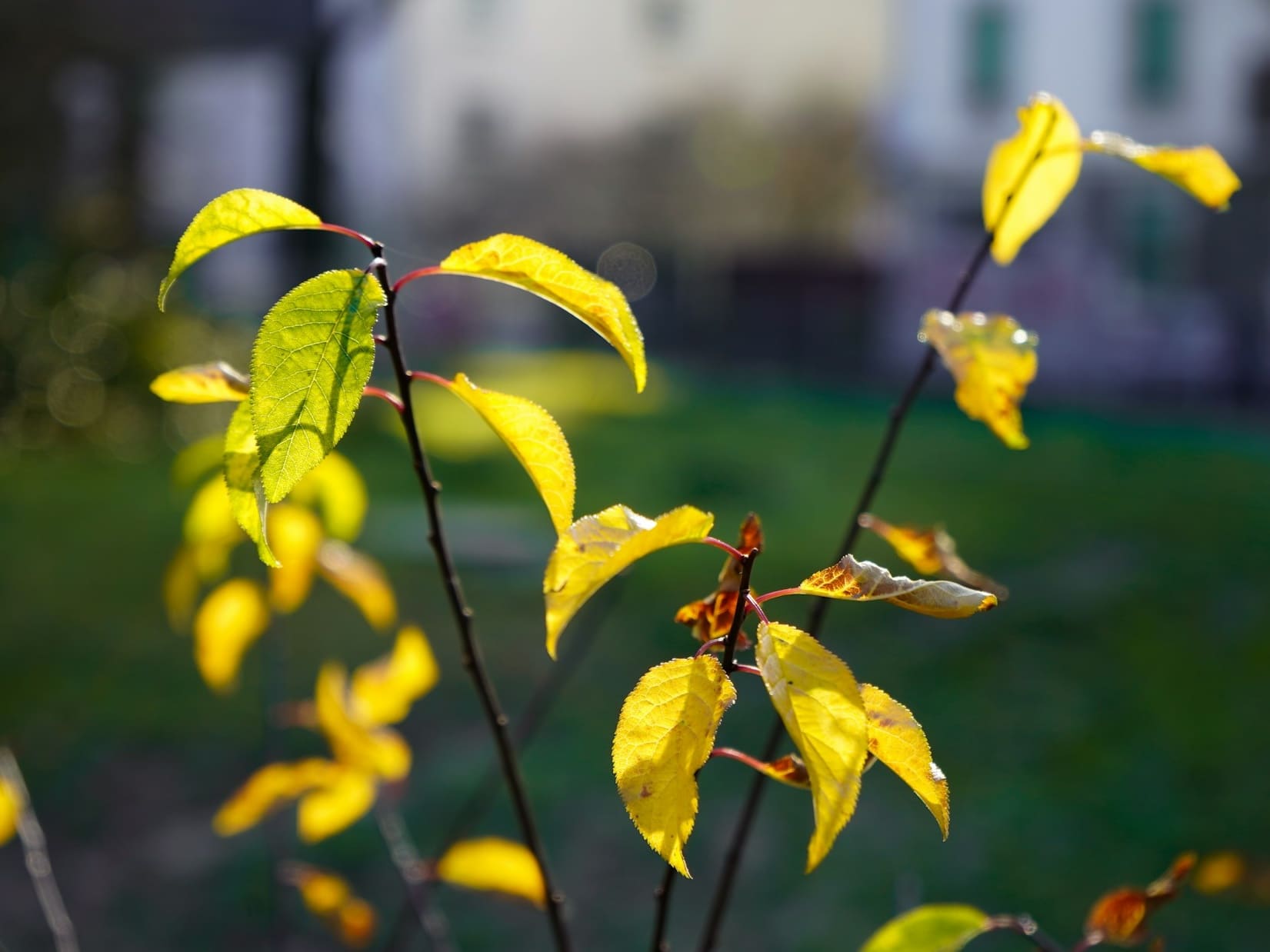
A healthy-looking plant develops one yellow leaf. Then another appears. The natural reaction is often to water it more, move it closer to a window, or add fertilizer.
Any of those changes might help. They might also do nothing—or make the real problem worse.
That is because plant leaves turning yellow can have many causes. Watering problems, poor drainage, unsuitable light, nutrient issues, pests, environmental stress, root problems, and simple natural aging can all produce yellow foliage. The pattern and location of the yellowing can provide useful clues.
The most useful rule is simple:
Yellow leaves are a clue, not a diagnosis.
Before changing anything, look at:
- Which leaves are yellow
- How many are affected
- Whether they are old or new
- Whether the yellowing is uniform or patterned
- Whether leaves are wilting, dropping, curling, or spotting
- Whether the growing medium is wet or dry
- Whether anything recently changed
A useful troubleshooting order is:
Identify → observe → moisture → drainage → light → roots → pests → nutrition → recent changes → species
Start by Looking at the Yellowing Pattern
The location and appearance of the yellow leaves can help narrow down what to investigate next.
Are the Oldest Lower Leaves Turning Yellow?
Possible explanations include:
- Natural aging
- Underwatering
- Overwatering or root stress
- Certain nutrient deficiencies
Do not assume that yellow lower leaves automatically mean the plant needs fertilizer.
Look at the rest of the plant.
If only one older leaf is yellow and the plant is producing healthy new growth, normal aging may be a reasonable explanation.
If several lower leaves are yellowing quickly, investigate further.
Are the Newest Leaves Turning Yellow?
When young or newly developing leaves are affected, consider:
- Light conditions
- Root stress
- Nutrient availability
- Certain nutrient-related chlorosis patterns
- Excess fertilizer in some situations
New growth yellowing deserves a different investigation from one old leaf at the base of a plant.
Are the Veins Green but the Tissue Between Them Yellow?
This pattern is known as interveinal chlorosis.
Depending on the plant and which leaves are affected, possible nutrient issues may involve:
- Iron
- Magnesium
- Manganese
The pattern alone is not enough to identify the exact nutrient.
Which leaves are affected, the plant species, soil conditions, root health, and pH may all matter.
Is the Entire Plant Looking Pale?
If much of the plant is turning pale or yellow, investigate broader growing conditions such as:
- Watering
- Root health
- Light
- Nutrition
- Temperature
- Root restriction
A whole plant losing its healthy color is different from one old leaf naturally reaching the end of its life.
Are There Other Symptoms?
Look for:
- Spots
- Fine stippling
- Webbing
- Sticky residue
- White cotton-like material
- Brown bumps
- Silvery areas
- Rot
- Dieback
Those additional symptoms may point toward pests, disease, or another stress rather than a simple watering problem.
Check Watering Before Reaching for Fertilizer
Water stress should be one of your first checks because both excess and insufficient water can contribute to yellow foliage.
Too Much Water Can Cause Yellow Leaves
A plant that remains too wet may develop:
- Yellow leaves
- Leaf drop
- Wilting
- Root problems
- Soft or decaying roots
One of the most confusing signs is wilting.
People often interpret wilted leaves as a request for more water, but plants with unhealthy, water-stressed roots can also wilt.
Before watering again, check what is happening below the surface.
Too Little Water Can Also Cause Yellowing
A plant that stays too dry may show:
- Wilting
- Very dry growing medium
- Crispy edges
- Older lower leaves yellowing and dropping
If the potting mix has become extremely dry, it may also pull away from the sides of the container.
Don’t Diagnose Watering by Leaf Color Alone
Both extremes can produce overlapping symptoms.
That means:
yellow + wilted does not automatically equal needs water.
Check the growing medium.
For a potted plant, ask whether it is:
- Still very wet
- Slightly moist
- Extremely dry
- Wet only lower in the pot
- Remaining saturated much longer than expected
Do not rely only on what the top surface looks like.
Think About What Recently Changed
Water needs do not remain exactly the same throughout the year.
Consider whether:
- You started watering more frequently
- Temperatures became cooler
- Light levels dropped
- The plant stopped actively growing
- The plant was moved
- The container changed
- The season changed
Water demand varies with the species, environment, container, light, temperature, and growth rate.
A rigid watering calendar is usually less useful than checking the plant and growing medium.
For more detail on this topic, see How Often Should You Water Container Plants? A Practical Guide to Getting It Right.
Check Whether Water Can Drain Properly
Watering frequency is only one part of the moisture problem.
A plant may be watered reasonably but still remain too wet if water cannot escape.
Check the Container
For potted plants, ask:
- Does the pot have drainage holes?
- Is the nursery pot sitting inside a decorative cover?
- Is water collecting inside the outer container?
- Is the plant sitting in a saucer full of water?
- Does the growing medium remain saturated?
A decorative pot can hide standing water very effectively.
You may think the plant is simply receiving normal watering while its roots remain wet for long periods.
Look at the Roots When Appropriate
If the plant is easy to inspect without causing unnecessary damage, look for roots that appear:
- Dark
- Soft
- Mushy
- Decayed
Root appearance differs between species, so avoid relying on one universal idea of what every healthy root must look like.
The important question is whether the roots appear firm and functional or clearly damaged and decaying.
Outdoor Plants Can Become Waterlogged Too
Poor drainage is not only an indoor-container problem.
Garden plants growing in saturated soil may develop:
- Yellow foliage
- Poor growth
- Root decline
- Wilting
- Dieback
Roots need suitable conditions as much as leaves do.
Don’t Add Water to a Plant That Is Already Wet
If a plant is wilting while the growing medium remains saturated, adding more water may make the root problem worse.
Check drainage and roots before assuming the plant is thirsty.
Check Whether the Plant Has the Right Light
Light stress can look surprisingly similar to water or nutrient stress.
Too Little Light Can Cause Yellowing
Insufficient light may contribute to:
- Pale foliage
- Weak growth
- Stretched stems
- Lower leaves yellowing and dropping
Indoor plants can gradually become unhappy in a position that is much darker than it appears to you.
Too Much Light Can Damage Leaves
Excessive direct sun can also create problems, especially for shade-adapted plants.
Possible signs include:
- Bleached patches
- Yellowing
- Brown scorch
- Drooping
- Damaged areas on exposed foliage
A plant moved suddenly from a protected position into stronger sunlight may react differently from a plant that has adapted to those conditions.
Look Beyond “Near a Window”
Ask:
- How far from the window is the plant?
- Is another building, curtain, or tree blocking light?
- Has seasonal daylight changed?
- Was the plant recently moved?
- Is damage stronger on the side facing the window?
The exact needs depend on the species.
Avoid the Universal “Bright Indirect Light” Fix
That phrase is useful for many houseplants, but it is not correct for every plant.
A:
- Succulent
- Fern
- Tomato
- Shade-loving woodland plant
- Full-sun flowering plant
may have very different light requirements.
Identify the plant before deciding where it should live.
Consider Nutrition—But Don’t Fertilize Automatically
Yellow leaves can be related to nutrition, but fertilizer should not be your first response.
Water, drainage, root health, and light should usually be checked first.
Nutrient Problems Can Produce Yellowing
Possible deficiencies may involve nutrients such as:
- Nitrogen
- Iron
- Magnesium
- Manganese
- Potassium
The symptoms depend on the nutrient and the plant.
Older Leaves Can Provide One Kind of Clue
For example, nitrogen deficiency can produce overall pale growth with yellowing that begins on older leaves.
But older yellow leaves do not prove nitrogen deficiency.
Water stress, root problems, light conditions, and natural aging can overlap with that appearance.
New Leaves With Green Veins Can Point Toward Iron-Related Chlorosis
A common iron-related pattern is:
- Yellow tissue
- Greener veins
- Stronger symptoms on newer growth
But even here, simply adding iron may not solve the cause.
Nutrients Can Be Present but Unavailable
This is an important distinction.
A soil may contain a nutrient while conditions make it difficult for the plant to absorb.
Soil pH can influence nutrient availability. In alkaline conditions, for example, iron can become less available to some plants.
That is why a plant can display nutrient-related symptoms even when the soil is not literally empty of that nutrient.
Root Stress Can Mimic Deficiency
If roots are damaged by:
- Too much water
- Too little water
- Poor aeration
- Other root stress
the plant may struggle to absorb nutrients properly.
Adding fertilizer does not repair unhealthy roots.
Don’t Fertilize “Just in Case”
Too much fertilizer can damage plants as well.
Follow the product label and the species-specific feeding requirements rather than increasing fertilizer simply because foliage is yellow.
Inspect for Pests
If watering, drainage, and light appear reasonable, inspect the plant closely.
Pest damage often comes with additional clues.
Check Both Sides of Every Leaf
Pay attention to:
- Leaf undersides
- Veins
- Leaf joints
- New growth
- Stems
Many pests prefer protected parts of the plant rather than sitting openly on top of a leaf.
Look for Spider-Mite Signs
Possible clues include:
- Fine pale stippling
- Dull foliage
- Bronzed appearance
- Fine webbing when populations are high
This type of damage may look different from a leaf that has turned uniformly yellow.
Look for Scale and Mealybugs
Possible signs include:
- Brown scale-like bumps
- White cottony or waxy clusters
- Sticky residue
- Yellowing
- Leaf drop
Sticky foliage is particularly useful as a clue that a sap-feeding pest may be involved.
Look for Thrips Damage
Thrips may cause leaves to appear:
- Dull
- Silvery
- Discolored
rather than completely yellow.
Separate a Suspect Houseplant
If one indoor plant appears to have a pest problem, keep it apart from other plants while you identify the issue.
Treatment depends on correctly identifying the pest, so avoid applying random pest products before you know what you are dealing with.
Decide Whether the Yellow Leaf Is Simply Aging
Not every yellow leaf needs treatment.
One Old Lower Leaf Can Be Normal
Plants naturally replace foliage.
An older lower leaf may turn yellow and eventually drop while the plant continues producing healthy growth.
Natural aging is more likely when:
- Only one or a few old leaves are affected
- New growth looks healthy
- The plant remains vigorous
- Yellowing is not spreading quickly
Look at the Whole Plant
Compare these situations:
Plant A: One old bottom leaf turns yellow while several healthy new leaves are growing.
Plant B: Half the plant becomes yellow in a short period.
The first may simply be normal leaf turnover.
The second deserves investigation.
Widespread Yellowing Is Different
If many leaves are affected, check:
- Moisture
- Drainage
- Roots
- Light
- Temperature
- Pests
- Nutrition
before assuming ordinary aging.
Species Matters More Than Generic Advice
A major mistake in plant troubleshooting is assuming every plant responds to the same care.
Different Plants Need Different Moisture Levels
Compare:
- Succulent
- Fern
- Orchid
- Tomato
- Hydrangea
- Tropical foliage plant
The appropriate moisture conditions can be very different.
A watering routine that helps one may damage another.
Yellowing Can Have Different Meanings
Some plants naturally lose older leaves periodically.
Others may respond to the same symptom with a more serious decline.
For example, occasional lower-leaf yellowing can occur naturally on some indoor palms, while more extensive yellowing may point toward watering stress or another issue.
Some Plants Are Especially Sensitive to Soil Conditions
Plants such as:
- Azaleas
- Rhododendrons
- Gardenias
- Blueberries
prefer particular soil conditions and can develop chlorosis when nutrient availability is affected by unsuitable pH.
Identify the Plant Before Treating It
Use a reliable source to confirm:
- Water needs
- Light requirements
- Soil preferences
- pH preferences
- Feeding
- Seasonal behavior
A symptom chart should start the investigation, not replace species-specific care.
Consider Recent Changes and Other Stress
Sometimes the most useful clue is not the yellow leaf itself but what happened shortly before it appeared.
Temperature Changes
Yellowing or leaf loss may follow:
- Cold exposure
- Drafts
- Sudden temperature changes
Check whether the plant is near:
- A cold window
- Exterior door
- Heating or cooling airflow
and compare those conditions with its species requirements.
Recent Repotting or Relocation
Ask whether the plant was recently:
- Purchased
- Repotted
- Moved between rooms
- Moved outside
- Brought indoors
- Transplanted
A plant suddenly experiencing different light, temperature, moisture, or root conditions may show stress.
Pot-Bound or Damaged Roots
Restricted or damaged roots can contribute to:
- Poor growth
- Yellow foliage
- Reduced vigor
Do not assume repotting is automatically the solution, however. First confirm that root restriction is actually present.
Watch for Signs of Disease
Disease becomes more plausible when yellowing is accompanied by:
- Distinct spots
- Rot
- Dieback
- Fungal-looking growth
- Abnormal mottling
When those symptoms appear, a more specific diagnosis may be necessary.
Yellow Leaf Patterns at a Glance
| What You See | Possible Areas to Check | Look for Next | Don’t Assume |
|---|---|---|---|
| One old lower leaf yellowing | Natural aging | Healthy new growth, otherwise vigorous plant | The plant is dying |
| Several lower leaves yellowing | Watering, roots, nutrition, light | Moisture, root condition, plant vigor | It definitely needs fertilizer |
| New leaves yellow with green veins | Nutrient availability, pH | Interveinal pattern, soil conditions | Adding iron always solves it |
| Whole plant pale or yellow | Light, roots, nutrition, water | Growth, moisture, root condition | One cause fits every plant |
| Yellow + wilted + wet soil | Overwatering, drainage | Standing water, damaged roots | Wilting means it needs water |
| Yellow + wilted + very dry soil | Underwatering | Dry root ball, crispy edges | A fixed watering calendar is best |
| Yellow or stippled + fine webbing | Spider mites | Leaf undersides, fine mottling | Nutrient deficiency |
| Yellow + sticky leaves | Sap-feeding pests | Scale, mealybugs, other pests | Watering problem |
| Yellow after moving plant | Environmental change | Light and temperature differences | It immediately needs fertilizer |
| Yellowing only on older leaves | Aging or certain stresses | Rate of spread, new growth | It is automatically normal |
This table can narrow your investigation, but it cannot diagnose the plant on its own.
What to Check When Plant Leaves Turn Yellow
When you notice yellowing, follow a consistent troubleshooting process instead of changing several things at once.
Step 1: Identify the Plant
Find the species or at least the general plant group.
Step 2: Identify Which Leaves Are Yellow
Ask:
- Old or new?
- Lower or upper?
- One leaf or many?
Step 3: Study the Pattern
Look for:
- Uniform yellow
- Green veins
- Yellow edges
- Spots
- Stippling
- Sticky residue
Step 4: Check the Growing Medium
Determine whether it is:
- Dry
- Moist
- Saturated
before automatically adding water.
Step 5: Check Drainage
Look for:
- Missing drainage holes
- Standing water
- Water trapped in an outer pot
- Growing medium remaining wet for unusually long periods
Step 6: Review the Light
Compare the plant’s position with its actual species requirements.
Step 7: Inspect Roots Where Appropriate
Check for:
- Decay
- Damage
- Severe crowding
without unnecessarily disturbing a healthy plant.
Step 8: Inspect for Pests
Examine:
- Leaf undersides
- Stems
- Veins
- Leaf joints
- New growth
Step 9: Consider Nutrition and pH
Only after basic environmental causes have been reviewed.
Step 10: Think About Recent Changes
Consider:
- Repotting
- Relocation
- Cold exposure
- Seasonal light changes
- Changed watering habits
Step 11: Compare With Species-Specific Guidance
Do not apply one generic rescue treatment to every yellow plant.
Remember:
Identify → observe → moisture → drainage → light → roots → pests → nutrition → recent changes → species
Common Mistakes When Trying to Fix Yellow Leaves
Watering Immediately
Yellow does not automatically mean thirsty.
Watering More Because the Plant Is Wilting
Overwatered plants can wilt too.
Check the moisture first.
Fertilizing Before Checking the Roots
If the roots are unhealthy, extra fertilizer may not address the problem.
Moving Every Yellow Plant Into Stronger Light
Too much sun can also damage foliage.
Diagnosing One Nutrient From a Photo
Several nutrient and environmental problems can produce similar symptoms.
Ignoring Drainage
How often you water is only part of the moisture equation.
Looking Only at the Tops of Leaves
Pests frequently hide underneath leaves, along veins, and around joints.
Treating One Old Leaf as an Emergency
A single older yellow leaf may simply be normal aging.
Giving Every Plant the Same Care
Species requirements differ.
Changing Everything at Once
Avoid simultaneously:
- Repotting
- Fertilizing
- Moving the plant
- Increasing watering
- Treating for pests
unless there is a clear reason.
If you change several variables together, it becomes much harder to understand what was wrong.
Should You Remove Yellow Leaves?
Correcting the cause matters more than removing the symptom.
Fully Yellow Leaves Can Often Be Removed
If a houseplant leaf is completely yellow, brown, mouldy, or shrivelled, removal may be appropriate after you have investigated why it happened.
Keep Useful Green Tissue
Do not remove large numbers of leaves simply because they look imperfect.
Leaves that remain substantially green can still support the plant while it recovers.
Use Appropriate Tools
If cutting is required, use suitable clean tools and follow species-specific pruning practices where relevant.
Do not prune aggressively simply to make a stressed plant look healthier.
When to Seek More Help
Some plant problems cannot be confidently diagnosed from leaf color alone.
Consider expert help when:
- Yellowing spreads rapidly
- Several plants develop the same unexplained problem
- Roots or stems appear severely rotted
- Unusual spotting or dieback develops
- A valuable tree or shrub is declining
- Soil or nutrient problems remain unclear
- Correcting obvious watering or light issues does not improve new growth
- You cannot identify a suspected pest
Useful resources may include:
- University extension service
- Botanical garden plant clinic
- Qualified horticulturist
- Plant diagnostic laboratory
For outdoor plants, a soil test can be useful when nutrient availability or pH is suspected.
Frequently Asked Questions About Yellow Plant Leaves
Why Are My Plant Leaves Turning Yellow?
Common causes include:
- Too much water
- Too little water
- Poor drainage
- Too little or too much light
- Root stress
- Nutrient problems
- Pests
- Environmental changes
- Natural aging
The yellow color alone cannot tell you which one is responsible.
Do Yellow Leaves Mean I’m Overwatering?
Not necessarily.
Overwatering can cause yellow foliage, but so can:
- Underwatering
- Poor light
- Nutrient issues
- Pests
- Natural aging
Check soil moisture and drainage before changing your routine.
Can Underwatering Make Leaves Yellow?
Yes.
A plant that remains too dry may show:
- Wilting
- Dry growing medium
- Crispy edges
- Older leaves yellowing and dropping
Why Are the Bottom Leaves Turning Yellow?
Possible explanations include:
- Normal aging
- Water stress
- Root problems
- Certain nutrient deficiencies
- Insufficient light
Look at how many leaves are affected and whether new growth remains healthy.
Why Are New Leaves Yellow but the Veins Are Green?
That pattern can be associated with interveinal chlorosis, including iron-related problems.
However, the underlying issue may involve nutrient availability and soil pH rather than simply a lack of iron in the soil.
Should I Fertilize a Plant With Yellow Leaves?
Not automatically.
First check:
- Water
- Drainage
- Roots
- Light
- Pests
Root and environmental stress can resemble nutrient deficiency, and unnecessary fertilizer may create additional problems.
Can Yellow Leaves Turn Green Again?
It depends on:
- Cause
- Severity
- Species
- How much healthy tissue remains
Fully yellow or dead leaves generally should not be expected to recover.
Focus instead on correcting the underlying problem and watching for healthy new growth.
Should I Cut Yellow Leaves Off?
Completely yellow or dead leaves can often be removed appropriately.
Avoid removing large amounts of still-green foliage simply for appearance, and follow species-specific pruning guidance where necessary.
Conclusion
When you see plant leaves turning yellow, resist the urge to immediately water, fertilize, or relocate the plant.
Yellow leaves tell you that something deserves attention. They do not tell you exactly what the plant needs.
Use this troubleshooting order:
Identify → observe → moisture → drainage → light → roots → pests → nutrition → recent changes → species
Start by looking at which leaves are affected and how the yellowing appears. Check whether the growing medium is wet or dry, then make sure excess water can drain away.
Compare the plant’s light conditions with its actual species requirements. Inspect roots where appropriate and look carefully beneath the leaves and around stems for pest clues.
Only then move toward nutrition and soil pH.
Remember that one old lower leaf may simply be reaching the end of its natural life, while widespread or rapidly progressing yellowing deserves more attention.
Most importantly, avoid changing everything at once.
Judge improvement by what happens next—especially whether the plant begins producing healthier new growth.
Before doing anything today, answer three questions:
Which leaves are yellow? Is the growing medium wet or dry? And what does this particular plant species actually require?