
A small garden can feel as though every decision competes with another. Add a table and there is less room for plants. Add several large pots and the path starts disappearing. Fill every wall and fence with greenery and the space can begin to feel crowded instead of relaxing.
The most useful small garden ideas start with planning rather than shopping. Decide how you want to use the space, protect the routes you need to walk through, understand where the sun and shade fall, and then choose plants and features that fit those conditions.
A simple framework is:
Measure → observe → prioritize → route → sit → plant → grow up → combine → edit
A small garden works best when every part has a purpose: somewhere to sit, somewhere to move, somewhere to grow, and vertical surfaces that help carry some of the planting load.
Plan the Garden Around How You Want to Use It
Before buying plants, containers, or furniture, decide what you actually want the garden to do.
Decide on the Main Purpose
Your priorities might include:
- Sitting and relaxing
- Growing herbs or vegetables
- Entertaining
- Adding flowers
- Creating more privacy
- Combining two or three uses
A limited outdoor space does not need every possible garden feature.
If relaxing matters most, give seating a good position first. If growing food matters more, reserve the sunniest area for productive planting.
Trying to fit dining, lounging, vegetables, children’s activities, storage, wildlife planting, and decorative features into a tiny area can make the garden feel fragmented.
Observe Sun and Shade
Before choosing plants, watch the space.
Notice areas that receive:
- Strong sun
- Partial shade
- Longer periods of shade
Light conditions help determine which plants can thrive in each location.
A sunny wall may suit edible containers or sun-loving flowers, while a more shaded corner may work better for seating or plants adapted to lower light.
Do not place plants based only on where an empty space happens to exist.
Record Existing Features
Make a simple sketch and include:
- Walls
- Fences
- Steps
- Patio
- Existing beds
- Doors
- Gates
- Drainage areas
- Utilities
- Good views
- Views you would prefer to screen
You do not need a professional landscape plan. A rough drawing is enough to prevent obvious conflicts.
Protect the Main Route
Identify how people need to move between:
- House and garden
- Door and gate
- Seating and planting
- Storage and working areas
Keep these routes usable after plants mature and furniture is in place.
A pathway that looks open when you plant a small shrub may feel much narrower once that plant reaches its mature spread.
Use Containers to Make Planting Flexible
Containers are especially useful when you have:
- Little open soil
- A paved courtyard
- A patio
- Narrow planting areas
- A space that may need to change over time
Match the Container to the Plant
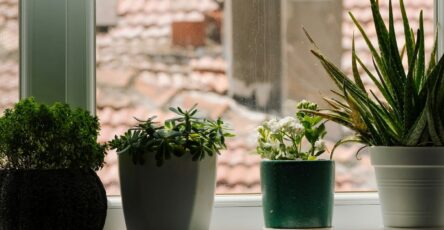
Containers can support many types of plants, including:
- Herbs
- Flowers
- Vegetables
- Shrubs
- Climbers
- Some compact fruiting plants
The appropriate container depends on the plant’s root system, mature size, growing conditions, and how long you plan to keep it there.
Avoid choosing a pot only because it fits visually into a gap.
Make Drainage a Priority
Containers need a way for excess water to escape.
Drainage holes are a basic requirement for most container gardening because waterlogged growing media can cause problems for roots.
Check:
- Whether the pot has drainage openings
- Whether drainage remains clear
- Where excess water will go
This matters especially on patios, balconies, or beside walls where repeated runoff may create another problem.
Use Fewer Useful Containers Instead of Many Tiny Pots
A large collection of small pots can make a compact garden feel busier and often requires more maintenance.
Where appropriate for the plant, a larger container can:
- Provide more root space
- Hold moisture for longer than a very small pot
- Support a more substantial plant
- Create a stronger focal point
That does not mean every plant needs the largest possible container. Match the pot to the species and growing conditions.
Group Containers
Instead of scattering individual pots everywhere, create small groups around:
- Seating
- Doorway
- Garden corner
- Wall
- Patio edge
Grouping leaves more open floor space and can make the planting feel more intentional.
Remember That Container Plants Need Attention
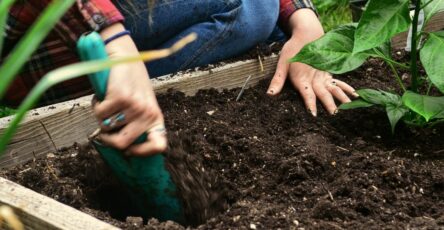
Plants in pots depend on a limited amount of growing medium.
They may need closer monitoring for:
- Moisture
- Drainage
- Feeding
- Root space
than comparable plants growing in open soil.
For more detailed watering guidance, see How Often Should You Water Container Plants? A Practical Guide to Getting It Right.
Grow Up Instead of Using More Ground Space
When ground area is limited, vertical gardening can add significant planting without filling the path or seating area.
Train Climbers Onto Supports
Climbing plants can use structures such as:
- Trellis
- Fence
- Obelisk
- Arch
- Pergola
- Canes or stakes
They can add:
- Flowers
- Foliage
- Privacy
- Height
while using relatively little soil area.
Always choose the plant and support together. A lightweight annual climber and a large mature woody climber do not have the same support requirements.
Grow Suitable Vegetables Vertically
Depending on the variety and growing conditions, climbing crops may include:
- Beans
- Peas
- Cucumbers
- Some squash
- Other vining vegetables
Supports can keep these plants from sprawling across valuable ground space.
For more detailed edible-container ideas, Best Vegetables to Grow in Containers for an Easy, Productive Garden is a useful next step.
Use Shelving for Pots
Outdoor shelving can turn a narrow wall into several planting levels.
It may work for:
- Herbs
- Small flowering plants
- Small pots
- Succulents where conditions suit them
Place plants according to light and watering needs rather than simply filling every shelf.
Use Hanging Containers Carefully
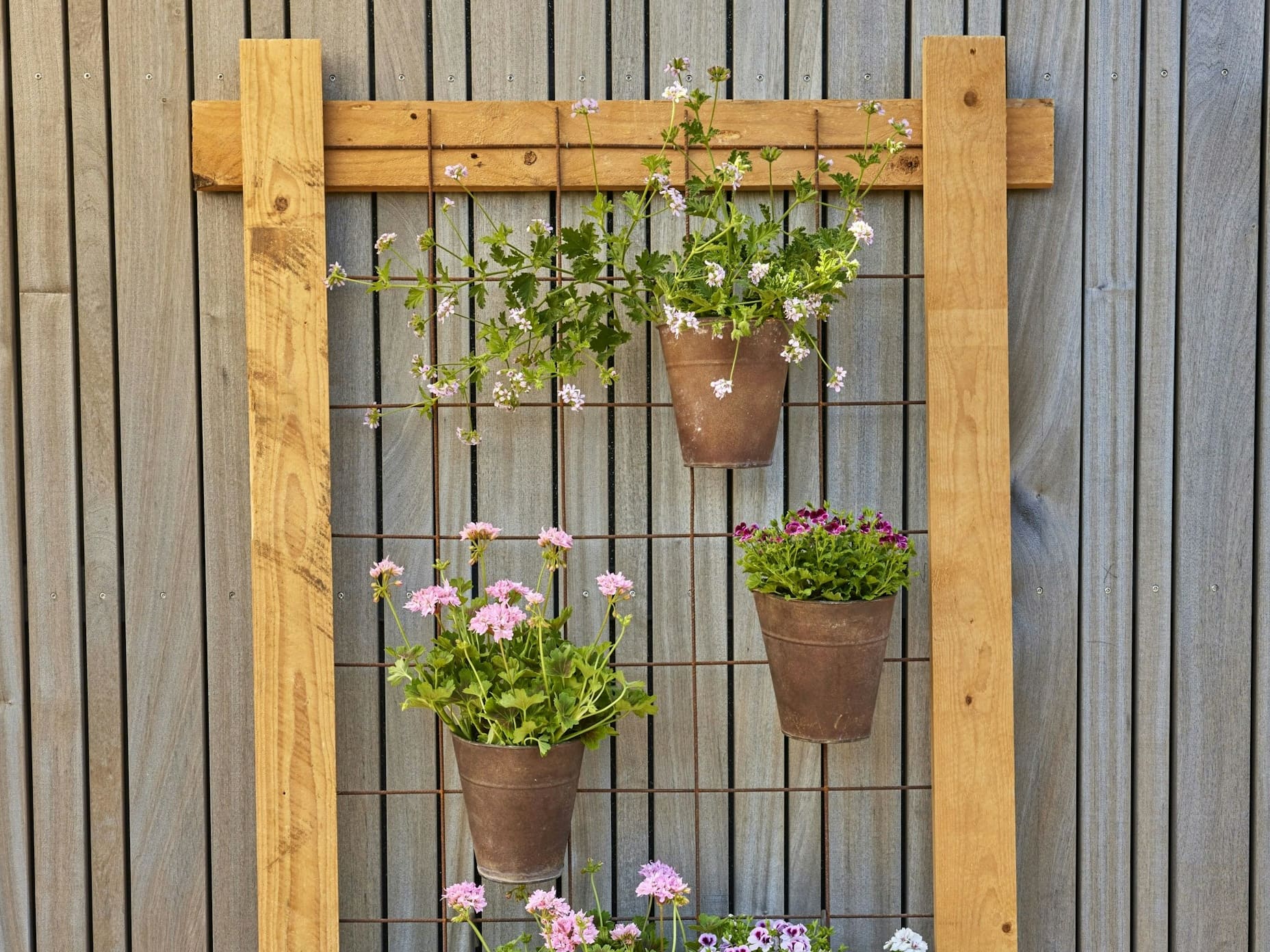
Hanging baskets and wall-mounted containers may work on:
- Pergolas
- Suitable railings
- Proper wall brackets
Before installing them, check that they will not:
- Block headroom
- Overload the fixing
- Become difficult to water
- Drain onto an unsuitable area
Keep Vertical Gardens Accessible
A vertical garden stops being practical if the top plants cannot be watered or inspected.
Before installing one, ask:
- Can I reach every container?
- Can I remove a pot if needed?
- Can I maintain the support?
- Can I prune the plants?
Vertical space is valuable only when you can actually care for what you put there.
Choose Compact Plants That Fit at Maturity
One of the easiest ways to overcrowd a small garden is to buy plants based on their size at the nursery.
Look for Compact Forms
Depending on the plant, useful descriptions may include:
- Compact
- Dwarf
- Patio
- Bush
- Miniature
Compact or dwarf vegetable varieties can be particularly useful in containers and small beds.
Match Plant Shape to the Space
Think about the form you need:
- Upright
- Narrow
- Trailing
- Climbing
- Mounding
A narrow path edge may suit an upright or compact plant better than something that spreads broadly.
Keep Paths Clear
Choose smaller-growing plants near:
- Steps
- Doorways
- Narrow paths
- Gates
Avoid placing wide, floppy plants where they will need constant cutting back just to keep access open.
Use One Strong Focal Plant
A single well-chosen:
- Shrub
- Compact evergreen
- Small tree
- Architectural plant
may have more impact than several unrelated plants competing for attention.
Check Mature Size
Before buying, look up:
- Mature height
- Mature spread
- Root needs
- Pruning requirements
The young plant is temporary. Its mature size determines whether it really fits.
Divide a Small Garden Into Simple Zones
A limited garden can still serve more than one purpose.
The key is not to create too many separate areas.
Choose Two or Three Functions
Possible zones include:
- Seating
- Growing
- Dining
- Storage
- Children’s activity
- Wildlife planting
A small garden may work beautifully as:
Seating + container growing
or:
Dining + vertical planting + storage
It does not need everything.
Use Planting to Define Areas
Subtle boundaries can come from:
- Large container
- Narrow planting strip
- Trellis
- Taller planting
You do not always need a physical wall.
Use Surface Changes Sparingly
A shift between:
- Paving
- Gravel
- Planting
can suggest a different function.
Too many surface materials, however, can divide an already small area into even smaller-looking pieces.
Use Height to Separate Functions
Instead of using more ground area, try:
- Trellis behind seating
- Tall container beside dining area
- Climber as a soft screen
Vertical separation can provide structure without shrinking the floor plan.
Choose Seating That Earns Its Space
Furniture can quickly dominate a compact garden.
Choose it after identifying where you actually want to sit.
Find the Best Sitting Area
Consider:
- Sun
- Shade
- Privacy
- View
- Wind exposure
A shaded corner may be more pleasant in a hot climate, while another garden may benefit from a sunny morning seat.
Consider Foldable or Movable Furniture
Useful options may include:
- Folding chairs
- Small café set
- Lightweight chair
- Folding bench
Furniture that can be moved gives the garden flexibility.
Use Built-In Seating Carefully
Built-in seating can be useful when it solves more than one problem.
For example, a properly designed bench might also:
- Provide storage
- Define a boundary
- Integrate with a raised planter
Any structural feature still needs appropriate construction.
Measure Furniture in Use
Do not measure only the table.
Allow for:
- Chairs pulled out
- People sitting
- Space to walk behind them
- Access to nearby doors and paths
A table may look compact until all its chairs are occupied.
Keep Garden Paths Simple
Paths consume valuable area, but some circulation is essential.
Connect Places You Actually Need to Reach
Common routes include:
- House → gate
- House → seating
- Path → storage
- Path → planting
Avoid adding winding decorative paths if they consume space without improving function.
Match the Route to Its Use
Think about whether the path needs to accommodate:
- People
- Watering can
- Wheelbarrow
- Garden tools
Do not use one universal path dimension for every garden. The appropriate size depends on use and any applicable accessibility requirements.
Keep Planting From Taking Over
Plants beside narrow routes should not constantly:
- Cover the path
- Obstruct doors
- Catch clothing
- Require severe trimming
Choose compact forms and check mature spread.
Consider Permeable Surfaces Where Suitable
Where appropriate to the site, permeable materials can allow more rainwater to enter the ground rather than adding unnecessary sealed hard surface.
Local drainage conditions and paving requirements still matter.
Turn Walls and Fences Into Growing Space
Boundaries can become some of the most valuable areas in a small garden.
Add Climbers
Possible supports include:
- Trellis
- Wires
- Fence
- Pergola
- Obelisk
Choose climbers according to:
- Sunlight
- Shade
- Soil
- Mature size
- Support requirements
Train Fruit Where Conditions Suit It
Trained fruit trees can make use of wall space without requiring the same footprint as a freely spreading tree.
Whether this works depends on:
- Climate
- Species
- Wall aspect
- Root space
- Pruning
Use Narrow Wall-Side Planting
A thin bed can still hold useful planting if you choose:
- Compact plants
- Upright forms
- Plants suited to the wall conditions
Wall-side soil can sometimes be drier because the wall creates a rain shadow.
Understand the Wall’s Conditions
Different wall orientations may create different combinations of:
- Sun
- Shade
- Warmth
- Shelter
- Wind exposure
Do not choose a climber simply because it looks good in another garden.
Protect the Structure
Some plants need dedicated supports rather than attaching directly to a wall.
Check:
- Wall condition
- Climber attachment habit
- Support type
- Fixing requirements
before installation.
Use Multifunctional Features
In a small garden, every permanent object takes up a noticeable share of the available space.
Features that solve more than one problem can be especially useful.
Combine Seating and Storage
A weather-suitable storage bench may provide:
- Seating
- Cushion storage
- Space for lightweight accessories
- Limited tool storage where appropriate
Combine Screening and Planting
A trellis can serve as:
- Plant support
- Visual screen
- Zone divider
Combine Food Growing and Decoration
Examples include:
- Attractive herb pots
- Compact vegetables
- Trained fruit
- Edible flowers where appropriate
Productive planting does not have to be hidden in a separate vegetable section.
Use Containers as Space Dividers
A pair of substantial containers can:
- Define seating
- Screen an unwanted view
- Add planting
without building a permanent barrier.
Use Movable Furniture
A suitable stool might sometimes work as:
- Extra seat
- Small side table
depending on the product’s intended use and load capacity.
Small Garden Ideas at a Glance
| Small-Space Problem | Practical Idea | Best For | Watch Out For |
|---|---|---|---|
| Little or no open soil | Containers | Herbs, flowers, vegetables, shrubs | Drainage and watering |
| Not enough ground area | Vertical planting | Climbers, suitable vegetables | Support strength and access |
| Plants crowd paths | Compact or upright varieties | Narrow beds and edges | Mature spread |
| Several functions needed | Simple zones | Dining, planting, relaxing | Too many tiny zones |
| Furniture overwhelms space | Folding or movable seating | Patios and courtyards | Storage when not in use |
| Path consumes too much area | Keep routes direct and functional | Access | Appropriate width and surface |
| Blank wall or fence | Trellis, climbers, shelves | Vertical planting | Aspect and fixing |
| Too many small pots | Group fewer useful containers | Patio and container gardens | Plant-specific pot size |
| Little storage | Multifunctional furniture | Cushions, tools, accessories | Weather resistance |
| Unattractive boundary | Planting or screening feature | Privacy and visual interest | Mature size and maintenance |
A small garden feels more useful when each feature solves a specific problem rather than simply filling an empty spot.
Common Small Garden Mistakes
Buying Plants Before Checking Sunlight
Growing conditions should help determine plant location.
Choosing Plants by Their Current Size
Always check mature height and spread.
Using Too Many Tiny Containers
Numerous small pots can make the space feel busy and may dry out more quickly than larger containers.
Forgetting Drainage
Make sure containers have appropriate drainage.
Blocking the Main Path With Pots
Protect circulation before adding decorative planting.
Filling Every Vertical Surface
Walls and fences still need:
- Maintenance access
- Appropriate fixing
- Suitable plants
- Practical watering
Planting Large Spreaders Beside Narrow Routes
Choose compact forms where movement space is limited.
Creating Too Many Zones
Prioritize the functions you actually use.
Buying Oversized Furniture
Measure furniture with people using it, not just while chairs are pushed in.
Ignoring Wall Aspect
A wall may create:
- Heat
- Shade
- Shelter
- Drier soil
depending on its orientation.
Installing Vertical Plants You Cannot Reach
Every plant still needs watering and maintenance.
Assuming Containers Are Automatically Low-Maintenance
Container plants may require more frequent monitoring because their roots have access to less growing medium.
Design a Small Garden in the Right Order
If you are starting from scratch, use this sequence.
Step 1: Measure the Space
Record:
- Length
- Width
- Walls
- Fences
- Doors
- Existing beds
- Fixed obstacles
Step 2: Observe Sun and Shade
Watch how light moves through the garden.
Step 3: Decide the Main Function
Choose priorities such as:
- Growing
- Sitting
- Dining
- Entertaining
- Relaxing
Step 4: Draw the Main Route
Protect the access you need before adding furniture or plants.
Step 5: Position Seating
Choose the most useful:
- View
- Light condition
- Privacy
- Shelter
Step 6: Reserve Ground Planting
Use open soil for plants that benefit from it most.
Step 7: Add Containers
Use properly drained pots to fill flexible spaces.
Step 8: Grow Vertically
Add suitable:
- Climbers
- Trellises
- Shelving
- Supported vegetables
Step 9: Choose Compact Plants
Check mature size before planting.
Step 10: Use Boundaries
Turn appropriate walls and fences into:
- Growing areas
- Supports
- Screens
- Displays
Step 11: Add Multifunctional Features
Look for opportunities to combine:
- Seating
- Storage
- Planting
- Screening
Step 12: Walk Through the Finished Plan
Imagine:
- Carrying a watering can
- Pulling out a chair
- Opening the gate
- Taking tools to a planting bed
If something blocks those tasks, edit the layout before adding more.
Remember:
Measure → observe → prioritize → route → sit → plant → grow up → combine → edit
Maintain a Small Garden Without Letting It Become Crowded
Small gardens need editing as much as planting.
Monitor Containers
Check them according to plant needs for:
- Moisture
- Drainage
- Nutrients
- Root space
Keep Paths Open
Prune or reposition plants that begin blocking:
- Steps
- Doors
- Main paths
- Seating
Use species-appropriate pruning guidance.
Check Vertical Supports
Inspect:
- Trellis ties
- Supports
- Climber growth
- Hanging planters
and maintain both the plants and the hardware.
Remove What Is No Longer Useful
If an unused:
- Pot
- Chair
- Shelf
- Decoration
is consuming valuable space, consider removing it.
Adapt With the Seasons
Containers can be moved or replanted as:
- Light changes
- Crops finish
- Flowers fade
- Seasonal planting changes
That flexibility is one of the strongest advantages of container gardening in a compact space.
Frequently Asked Questions About Small Gardens
What Are the Best Small Garden Ideas for Limited Outdoor Space?
Good options include:
- Containers
- Vertical planting
- Compact plants
- Simple zoning
- Appropriately scaled seating
- Clear paths
- Wall and fence planting
- Multifunctional features
Choose according to your actual site rather than trying to include everything.
What Can I Grow in a Small Garden?
Depending on climate, sunlight, season, and available root space, possibilities include:
- Herbs
- Flowers
- Compact vegetables
- Shrubs
- Climbers
- Some compact fruits
How Can I Add More Plants Without Losing Patio Space?
Use vertical areas such as:
- Trellis
- Shelving
- Climbers
- Hanging containers
- Supported vegetables
while keeping them accessible for maintenance.
What Vegetables Work Well in Small Spaces?
Depending on your climate and growing conditions, container-friendly crops may include:
- Lettuce
- Herbs
- Peppers
- Tomatoes
- Radishes
- Leafy greens
- Beans
Compact, bush, and dwarf varieties may be especially useful.
Are Containers Good for Small Gardens?
Yes.
Containers are flexible and useful where open soil is limited, but they still need suitable:
- Drainage
- Root space
- Growing medium
- Water
- Feeding
according to the plant.
How Can I Add Seating Without Making the Garden Feel Crowded?
Consider:
- One well-positioned chair
- Small café set
- Folding furniture
- Appropriately sized bench
Choose the sitting location before buying the furniture.
What Should I Plant Against a Wall or Fence?
Choose according to:
- Sunlight
- Shade
- Wall aspect
- Soil moisture
- Available root space
- Mature size
Climbers can be particularly useful when you want more planting without losing ground area.
How Can I Make a Small Garden Look Less Cluttered?
Use:
- Fewer plant groups
- Repeated materials
- Clear pathways
- One main seating area
- Vertical planting
- A defined focal point
and remove things that no longer serve a purpose.
Conclusion
The most successful small garden ideas are not about fitting the maximum number of plants, pots, and furniture into the available area.
They are about using limited space deliberately.
Use:
Measure → observe → prioritize → route → sit → plant → grow up → combine → edit
Decide how you want the garden to function before buying plants. Observe the sunlight, preserve the main routes, and choose a seating area that works with the way you actually want to use the space.
Use containers where open soil is limited, but give plants suitable drainage and root space. Move planting upward with climbers, trellises, shelves, and supported crops where appropriate.
Choose compact plants based on mature size rather than nursery size. Keep narrow paths free from spreading growth, and use walls and fences as growing surfaces when their conditions and structure are suitable.
Limit the number of zones, scale furniture to the real available footprint, and look for features that can do more than one job.
Most importantly, keep editing.
As plants grow and your needs change, remove what no longer works rather than letting the garden become progressively more crowded.
Start with a tape measure and identify only three things: the route that must stay open, the place where you most want to sit, and the best area for plants based on sunlight and growing conditions. Once those are clear, the rest of the layout becomes much easier.