
A kitchen can feel short on storage even when every cabinet is already full. Pots may be stacked five deep, lids fall over every time a drawer opens, pantry food disappears behind other packages, plastic containers multiply without matching lids, and the countertop slowly becomes the default home for anything that does not fit elsewhere.
The best kitchen storage ideas are not always about adding more cabinets or buying more organizers. Often, the bigger improvement comes from making the storage you already have easier to see, reach, and reset.
A useful approach is:
Edit → prioritize → reveal → divide → go vertical → clear → maintain
That means reducing what you do not need, giving everyday items the best locations, improving access to deep and tall spaces, and only then adding storage products that solve a specific problem.
Fix Access Before Adding More Storage
Before deciding that your kitchen needs additional storage, look for places that are technically full but function poorly.
Find Storage That Is Hard to Use
Common problem areas include:
- Deep base cabinets
- Tall cabinet shelves with empty space above short items
- Blind corners
- Overfilled utensil drawers
- Pots stacked too deeply
- Loose pot lids
- Cabinets where the back is difficult to reach
- Counters holding rarely used appliances
A full cabinet is not necessarily a well-used cabinet.
A deep shelf may hold a lot, but if you must remove everything at the front to reach one item at the back, much of that storage is inconvenient.
Give Prime Storage to Everyday Items
The easiest-to-reach areas should generally hold things you use regularly.
Examples include:
- Everyday cookware
- Plates and bowls
- Regular ingredients
- Cooking utensils
- Frequently used appliances
Secondary storage is better suited to:
- Holiday serving pieces
- Specialty cookware
- Backup ingredients
- Bulk refills
- Rarely used appliances
This makes daily cooking easier without changing the kitchen itself.
Remove What No Longer Deserves Space
Before buying organizers, look for:
- Duplicate utensils
- Broken containers
- Cracked food-storage boxes
- Lids without containers
- Containers without lids
- Unused appliances
- Pantry products you no longer want
Reducing unnecessary volume often creates more useful space than adding another basket.
Make Kitchen Cabinets Easier to See and Reach
Cabinets can provide plenty of storage while still hiding a surprising amount of usable space.
Add Shelf Inserts Where Height Is Wasted
A tall shelf holding short mugs or bowls often leaves a large unused area above them.
Shelf inserts can create another level for:
- Mugs
- Bowls
- Small plates
- Canned foods
- Jars
This works best when the extra level improves access rather than creating another tightly packed layer.
Use Pull-Out Storage in Deep Cabinets
Deep base cabinets are often difficult because you can see only what sits at the front.
Depending on the cabinet, possible solutions include:
- Sliding baskets
- Pull-out trays
- Deep drawers
- Retrofit pull-out units
- Removable handled bins
These can be useful for:
- Pots
- Pans
- Dry foods
- Small appliances
Always check cabinet dimensions and product compatibility before installing permanent hardware.
Make Corner Cabinets More Accessible
Corner cabinets can hold a lot while still being awkward to use.
Options may include:
- Carousel
- Rotating shelf
- Pull-out corner fitting
The goal is to bring stored items toward you rather than reaching deep into the cabinet.
Use Removable Bins as Simple Pull-Outs
You do not always need built-in hardware.
A handled bin can group:
- Baking ingredients
- Breakfast foods
- Snacks
- Sauces
- Small pantry packets
Pull out the entire category rather than reaching behind several individual items.
Don’t Pack Every Shelf Completely Full
Storage should leave enough space to:
- See what you own
- Remove an item easily
- Return it without rearranging everything
Maximum capacity is not always maximum usability.
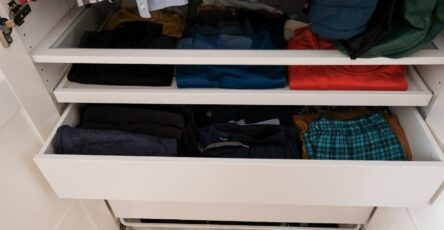
Use Drawers for Items That Benefit From a Top-Down View
Drawers can be especially useful because you can see contents from above.
Divide Everyday Utensils by Function
Instead of one mixed drawer, create useful groups.
Everyday cutlery
- Forks
- Spoons
- Table knives
Cooking utensils
- Spatulas
- Tongs
- Ladles
- Wooden spoons
Prep tools
- Measuring spoons
- Measuring cups
- Peeler
- Can opener
A divider is useful only when it reflects how you actually use the tools.
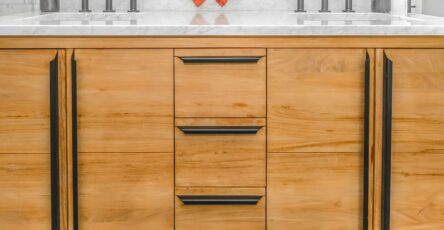
Use Deep Drawers for Bulky Categories
Deep drawers can work well for:
- Pots
- Pans
- Mixing bowls
- Baking dishes
- Food-storage containers
Full-extension drawers can also make items at the back easier to access.
Add Dividers to Stop Larger Items Moving Around
Dividers can help separate:
- Pans
- Pot lids
- Cutting boards
- Food-container lids
This prevents one large drawer from turning into a loose pile.
Avoid Overcomplicating the Drawer
More compartments are not always better.
If you create too many tiny categories, the system becomes difficult to maintain when your tools change.
Build the drawer around real categories, not around every empty section of an organizer.
Build Pantry Storage Around Visibility and Food Conditions
A pantry should make food easy to see while also keeping it stored appropriately.
Group Foods by Use
Possible categories include:
- Breakfast
- Baking
- Pasta and grains
- Snacks
- Canned foods
- Sauces
- Backup products
This makes it easier to see what you already have.
Keep Frequently Used Foods Easy to Reach
Everyday foods can occupy the most accessible shelves.
Less frequently used products can move to:
- Higher shelves
- Deeper storage
- Secondary pantry areas
Use Bins for Small Packages
Bins can help contain:
- Snack packets
- Baking sachets
- Seasoning envelopes
- Small boxes
Labels can be useful if the contents are not immediately obvious.
Use Clear Containers Selectively
Appropriate plastic or glass containers may be useful for dry foods such as:
- Rice
- Pasta
- Cereal
- Dry beans
USDA guidance emphasizes storing dry goods in a cool, clean, dry location and notes that suitable containers can provide additional protection where appropriate.
Don’t Transfer Everything Into Matching Jars
A visually uniform pantry is optional.
Original packaging may include:
- Ingredient information
- Preparation directions
- Storage instructions
- Lot information
- Date information
If you transfer food, preserve information you may need later.
Keep Food Away From Household Chemicals
Do not store shelf-stable foods next to:
- Cleaning products
- Household chemicals
- Other non-food substances
Food storage should remain separate from chemical storage.
Use Reliable Guidance for Storage Times
Avoid relying on generic social-media charts for how long every food lasts.
For specific pantry, refrigerator, or freezer questions, use food-specific guidance such as FoodKeeper and follow package instructions where relevant.
Use Vertical Space When Cabinets and Drawers Are Full
Small kitchens often have more usable vertical space than people realize.
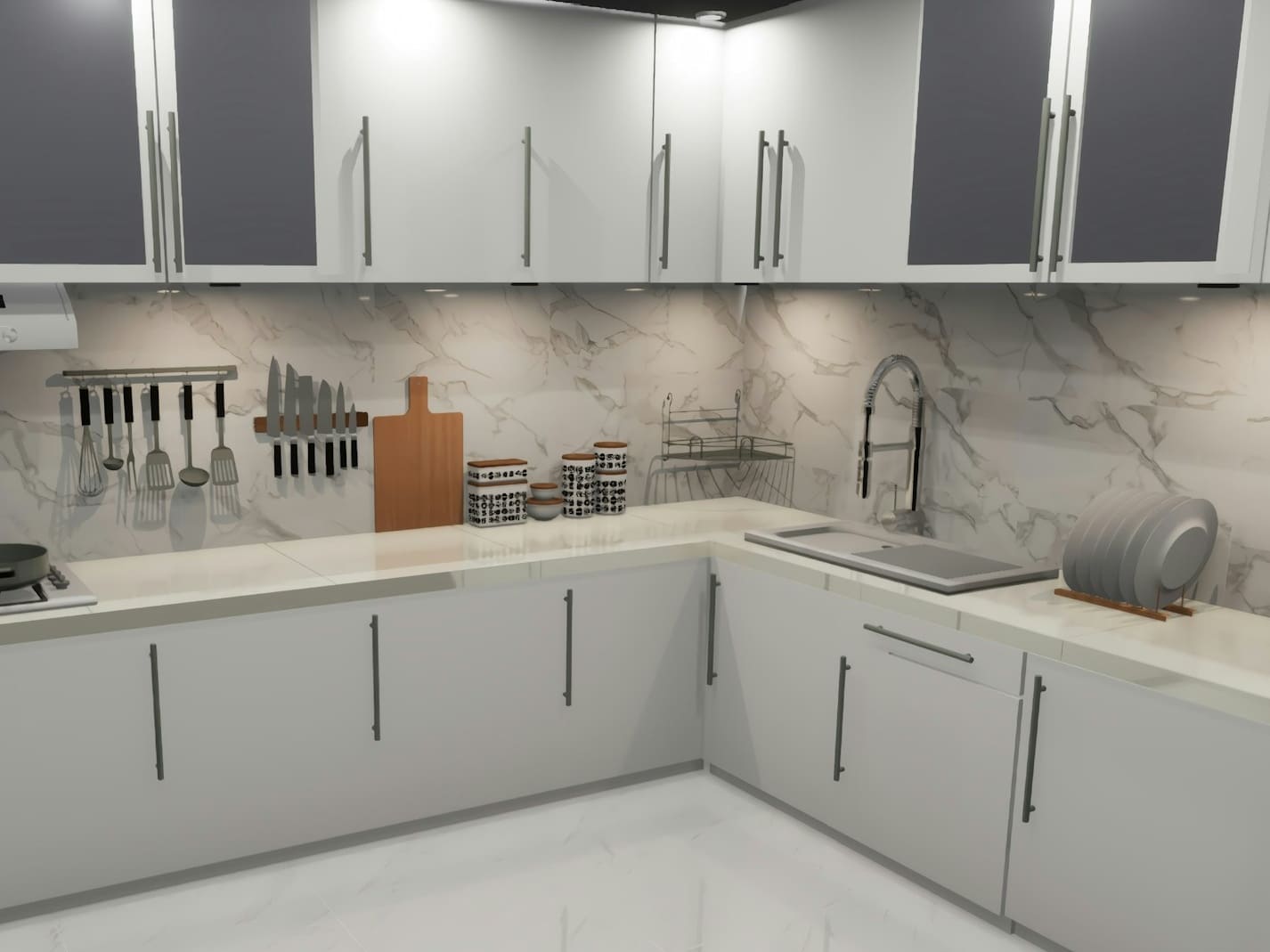
Add Wall Rails and Hooks
Wall-mounted systems can hold:
- Cooking utensils
- Towels
- Small containers
- Some cookware where the system is designed for it
This can keep frequently used items accessible while freeing drawer and counter space.
Add Wall Shelves Carefully
Open shelves can work for:
- Everyday mugs
- Frequently used jars
- Cookbooks
- Lightweight kitchen items
Avoid turning every wall into open storage.
A kitchen can become visually crowded when too many unrelated objects remain visible.
Use the Inside of Cabinet Doors
Depending on the organizer and cabinet door, this area may hold:
- Wraps
- Cutting boards
- Lightweight tools
- Small supplies
Check that the door, hinges, and organizer are suitable for the intended load.
Consider Under-Shelf Storage
Clip-on or hanging baskets can use unused space beneath a shelf when compatible with the cabinet.
These can work well for lightweight items that otherwise take up a full shelf.
Put Occasional Items Higher
Higher storage is better suited to:
- Seasonal serving pieces
- Specialty appliances
- Bulk backup supplies
than to items needed several times per day.
Don’t Guess at Wall-Mounted Load Capacity
Rails, shelves, hooks, and wall organizers all have product-specific requirements.
Capacity depends on:
- Product design
- Fasteners
- Wall construction
- Installation
Follow the manufacturer’s installation and load instructions rather than using a generic rule.
Keep Counters as Working Space
Countertops are easy to turn into storage because they are always accessible.
But every item stored permanently on the counter takes away work space.
Keep Out Only What Earns Daily Access
Good candidates might include:
- Coffee maker used every day
- Kettle
- Frequently used utensil holder
An appliance used only occasionally may be better in a cabinet.
Use Trays to Contain Small Groups
A tray can organize items that genuinely need to stay out.
Cooking tray
- Oil
- Salt
- Pepper
Coffee tray
- Coffee
- Sugar
- Related accessories
The advantage is that the whole group can be lifted at once when cleaning the counter.
Protect Your Main Prep Zone
Keep your best work surface clear of:
- Bulk groceries
- Decorative baskets
- Rarely used appliances
- Overflow pantry products
A countertop should still function as a countertop.
Use Vertical Storage Instead of More Counter Organizers
If suitable, move items such as:
- Utensils
- Towels
- Small spice containers
onto compatible rails, hooks, or wall systems.
Adding a countertop organizer still consumes countertop space.
Leave a Landing Area Where Useful
A small clear area near the refrigerator can make it easier to:
- Unload groceries
- Set down ingredients
- Transfer refrigerated items
Your layout may not allow a dedicated landing area, but protecting some clear counter space can improve everyday workflow.
Store Pots and Pans Without Unstacking Everything
Cookware is one of the most space-hungry kitchen categories.
Keep Daily Cookware Closest to the Stove
Examples include:
- Main frying pan
- Regular saucepan
- Frequently used pot
Specialty cookware can occupy secondary storage.
Use Deep Drawers Where Available
Deep drawers can make cookware visible from above.
Depending on the drawer design, dividers or peg systems may help stop:
- Pans
- Pots
- Lids
from sliding into one pile.
Use Pull-Outs in Cabinets
Pull-out baskets or trays can make heavy cookware easier to reach from deep cabinets.
Instead of reaching into the back, bring the storage toward you.
Use Corner Cabinets for Bulky Cookware
Where compatible, carousels and pull-out corner systems can work well for:
- Large pots
- Pans
- Less frequently used cookware
Store Pot Lids Vertically
Lids are often easier to manage upright.
Possible solutions include:
- Lid rack
- Drawer divider
- Adjustable organizer
Vertical storage keeps lids visible and reduces the need to lift an entire pile.
Be Careful When Nesting Cookware
Stacking can save space, but the cookware finish matters.
If a manufacturer warns against direct stacking or scratching, follow its care guidance.
Do not assume every pan can be nested safely simply because it fits.
Fix Food-Container Storage
Food containers often become frustrating because two separate categories are mixed together:
containers and lids.
Match Every Container With Its Lid
Empty the entire collection.
Remove or repurpose appropriately:
- Broken containers
- Cracked containers
- Unmatched lids
- Containers without lids
Keeping unmatched pieces indefinitely only uses space.
Nest Compatible Containers
Where the design allows it:
- Nest identical shapes
- Group by size
- Keep compatible systems together
Avoid mixing several unrelated container systems into one unstable stack.
Store Lids Vertically
Use:
- Divider
- Basket
- Lid organizer
Sort them by size if that makes matching easier.
Use a Drawer if You Have One
A deep drawer can be especially useful because you can see:
- Container sizes
- Lid groups
- Missing matches
from above.
Keep Cabinet Storage Simple
If you do not have a suitable drawer, try a basic cabinet setup:
- Containers nested on one side
- Lids upright on the other
- Larger pieces behind
Avoid building one tall mixed pile.
Follow the Exact Container Instructions
Claims such as:
- Microwave-safe
- Freezer-safe
- Dishwasher-safe
- Leakproof
depend on the specific product.
Check the manufacturer rather than assuming every food container can be used in every situation.
Add Storage to a Small Kitchen Without Making It Feel Crowded
Small kitchens need additional storage to be selective.
The goal is not to cover every surface with organizers.
Use Narrow Vertical Areas
Possible options include:
- Slim wall rail
- Narrow shelves
- Tall pantry unit
- Cabinet-door storage
Even a narrow unused area can sometimes provide useful storage.
Consider a Mobile Trolley
A trolley can serve as:
- Pantry overflow
- Coffee station
- Baking station
- Prep support
- Cookware storage
Because it moves, it can provide storage without permanently occupying one kitchen zone.
Choose one only if it solves a specific problem.
Use Stackable Storage Carefully
Stackable containers or bins can increase capacity.
But do not create tall towers where reaching the lowest item requires removing everything above it.
Prefer Storage That Performs More Than One Job
Examples may include:
- Island with drawers
- Trolley with shelves
- Compact prep cart with storage
In a small kitchen, a piece that combines storage with another useful function may be more valuable than a single-purpose organizer.
Keep Open Storage Edited
Use visible storage mainly for items that are:
- Frequently used
- Easy to reset
- Visually compatible with the room
Keep miscellaneous supplies behind doors where possible.
Kitchen Storage Solutions at a Glance
| Storage Problem | Strong Solution | Good For | Watch Out For |
|---|---|---|---|
| Tall cabinet with wasted height | Shelf insert | Mugs, bowls, jars | Shelf and load limits |
| Deep cabinet | Pull-out or handled bins | Pots, food, appliances | Hardware clearance |
| Corner cabinet | Carousel or pull-out | Bulky cookware | Cabinet compatibility |
| Crowded drawer | Dividers | Utensils, tools | Too many micro-zones |
| Limited wall storage | Rails, hooks, shelves | Daily utensils | Wall and load requirements |
| Cluttered counter | Move occasional items away | Prep space | Appliance requirements |
| Stacked pans | Deep drawer or divider | Cookware | Drawer capacity |
| Loose pot lids | Vertical organizer | Lids | Fit and stability |
| Pantry packets disappear | Pull-out bins | Snacks, baking | Overfilling |
| Food-container chaos | Nested containers + vertical lids | Containers | Mismatched pieces |
| Very small kitchen | Vertical or mobile storage | Overflow storage | Crowded circulation |
The best storage solution is the one that makes something easier to reach and easier to put back, not simply the one that fits the most.
Common Kitchen Storage Mistakes
Buying Organizers Before Measuring
Before buying storage products, measure:
- Cabinet width
- Cabinet depth
- Shelf height
- Door hinges
- Drawer dimensions
- Available clearance
An organizer that technically fits may still block a hinge or prevent a drawer from closing.
Trying to Fill Every Inch
Maximum capacity can create poor accessibility.
Leave enough space to remove and return items comfortably.
Ignoring Vertical Space
Unused wall and shelf height may provide more opportunity than adding another basket to the counter.
Putting Daily Items in Difficult Locations
The best storage should go to the things you use most.
Filling Counters With Storage Products
Countertop baskets and shelves are still taking up counter space.
Use them selectively.
Stacking Cookware Too Deeply
If you must move several pots every time you want one frying pan, the storage system is creating extra work.
Keeping Unmatched Lids
Edit the collection before buying another lid organizer.
Decanting Every Pantry Product
Matching jars are not a requirement for effective food storage.
Visibility and correct storage conditions matter more.
Ignoring Food-Storage Conditions
Dry goods need appropriate storage conditions, while foods requiring refrigeration should not be treated like pantry items.
Guessing at Weight Limits
Cabinet shelves, wall rails, drawers, shelves, and trolleys all have product-specific load capacities.
Check the manufacturer.
Making a Small Kitchen Visually Busier
Not every blank wall, counter corner, or cabinet door needs another organizer.
Sometimes the better solution is reducing what is stored.
Improve Kitchen Storage in the Right Order
If the whole kitchen feels crowded, work through it in a logical sequence.
Step 1: Identify the Worst Problems
Start with the places causing the most frustration.
Examples:
- Missing counter space
- Deep cabinets
- Pot-and-pan piles
- Container chaos
- Pantry overflow
Step 2: Reduce the Volume
Remove:
- Broken pieces
- Duplicates
- Unmatched items
- Things you no longer use
Step 3: Give Everyday Items Prime Locations
Keep the most frequently used things easiest to reach.
Step 4: Improve Cabinet Access
Add only where useful:
- Shelf inserts
- Pull-outs
- Bins
- Corner solutions
Step 5: Improve Drawers
Create categories that reflect how you use the kitchen.
Step 6: Organize Pantry Foods
Group similar foods and make sure they are stored appropriately.
Step 7: Use Vertical Space
Consider compatible:
- Rails
- Hooks
- Door organizers
- Wall shelves
Step 8: Clear the Counter
Move occasional-use items into storage.
Step 9: Solve Cookware Storage
Reduce deep stacks and store lids vertically where practical.
Step 10: Fix Food Containers
Keep compatible containers together and organize lids separately.
Step 11: Add Mobile Storage Only if Needed
A small kitchen does not automatically need a trolley.
Add one only if it clearly solves a storage or workflow problem.
Step 12: Test the System
Use the kitchen normally for several days.
Ask:
- Can you see what you own?
- Can you reach it easily?
- Can you put it back quickly?
- Has the counter stayed clearer?
The full process is:
Edit → prioritize → reveal → divide → go vertical → clear → maintain
Frequently Asked Questions About Kitchen Storage
What Are the Best Kitchen Storage Ideas for Small Spaces?
Useful options include:
- Shelf inserts
- Deep drawers
- Pull-outs
- Wall rails
- Hooks
- Door storage
- Narrow shelves
- Mobile trolleys
Start by deciding whether your real problem is lack of capacity or poor access to the storage you already have.
How Can I Create More Kitchen Cabinet Storage?
Look for wasted:
- Height
- Depth
- Corner space
Then consider:
- Shelf inserts
- Pull-out bins
- Sliding baskets
- Carousels
- Dividers
The goal is to make existing cabinet space more usable.
How Do I Add Storage to a Kitchen With Very Few Cabinets?
Vertical and mobile storage may help.
Possible options include:
- Rails
- Hooks
- Wall shelves
- Cabinet-door storage
- Trolley
Keep daily items easiest to reach and avoid covering every wall with open storage.
How Should Pots and Pans Be Stored?
Keep frequently used cookware near the cooking area.
Depending on the kitchen, useful solutions include:
- Deep drawers
- Pull-outs
- Dividers
- Corner fittings
Store lids vertically when that improves visibility and access.
How Do I Organize Food Containers and Lids?
Start by matching every container with a lid.
Then:
- Remove broken pieces.
- Remove unmatched pieces.
- Nest compatible containers.
- Sort by size.
- Store lids vertically.
A deep drawer can make the collection easier to see from above.
Should Dry Pantry Food Be Put Into Containers?
Not necessarily.
Many packaged dry goods can remain in their original packaging.
Suitable containers can provide additional protection for some foods when needed.
Keep dry goods in appropriate cool, clean, dry conditions and preserve important package information if you transfer food.
How Do I Keep Kitchen Counters From Becoming Cluttered?
Reserve counters primarily for items you use frequently.
Move:
- Occasional appliances
- Bulk supplies
- Overflow food
- Miscellaneous household objects
into more appropriate storage.
Where compatible, wall storage can also move some daily tools off the countertop.
Conclusion
More kitchen storage does not automatically mean adding more cabinets.
Often, the biggest improvement comes from making your existing cabinets, drawers, walls, pantry areas, and worktops easier to use.
Start with:
Edit → prioritize → reveal → divide → go vertical → clear → maintain
Remove broken and unnecessary items before buying organizers. Give everyday items the easiest locations. Use shelf inserts when cabinet height is being wasted and pull-outs where deep storage hides what you own.
Use drawers for categories that benefit from a top-down view, keep pantry foods visible and appropriately stored, and move selected daily tools onto compatible vertical storage when cabinet space is limited.
Protect countertops as working surfaces. Reduce deep cookware stacks, keep lids upright where practical, and organize food containers as two categories: containers and lids.
Most importantly, focus on usable storage rather than maximum capacity.
Choose the single kitchen area that frustrates you most—one drawer, one deep cabinet, the pot-and-pan area, your food-container collection, or the countertop—and fix that one problem before buying organizers for the rest of the kitchen.