
A small home can feel as though it has run out of storage long before it has actually run out of usable space. Closets become packed, countertops start doing double duty as storage, bags collect on chairs, and adding another basket often just moves the clutter somewhere else.
The best storage ideas for small spaces are not about squeezing as many belongings as possible into every available inch. They are about keeping the right items, giving them logical homes, and using walls, furniture, and overlooked areas more effectively.
Before buying another cabinet, look at the space you already have. There may be useful room above, below, behind, or inside furniture that is already part of your home.
Declutter Before You Add More Storage
Before trying to create more storage, reduce what actually needs storing.
Adding containers without reviewing their contents can leave you with the same amount of clutter—just hidden in more boxes.
Start With One Storage Problem
Choose one manageable area:
- An overflowing kitchen cabinet
- One bedroom drawer
- One bathroom shelf
- An entryway pile
- One section of a closet
Avoid emptying every cabinet and closet at once. A contained project is easier to finish and gives you a chance to test whether the new system actually works.
Remove What Does Not Need Storage
As you sort, use simple categories:
- Keep
- Move somewhere else
- Donate or give away
- Sell
- Recycle
- Dispose of appropriately
For items you are unsure about, ask:
- Do I use this?
- Does it still work?
- Do I own duplicates?
- Is it worth the storage space it occupies?
- Where would I logically look for it later?
The last question is particularly helpful. If you keep something but have no sensible place for it, you may need to rethink either the item or the storage around it.
Give Everything You Keep a Destination
Do not simply move clutter into a new container.
Instead, decide where the category belongs.
For example:
- Chargers → charging drawer
- Batteries → household supplies box
- Extra bedding → under-bed storage
- Everyday bags → entryway hooks
- Seasonal clothing → secondary storage
- Cleaning supplies → safe designated storage
The goal is not merely to hide belongings. It is to make them easier to find and return.
For a broader reset, you can pair this process with home organization ideas that make daily life easier.
Organize Storage Around Where and How Often You Use Things
Not every belonging deserves the easiest shelf or drawer.
Organizing by frequency of use helps reserve your best storage for everyday life.
Give Everyday Items the Easiest Locations
Good places for frequently used belongings include:
- Front sections of drawers
- Easy-to-reach shelves
- Hooks close to the point of use
- Accessible cabinet areas
- Open baskets for items returned often
Examples:
- Daily toiletries near the sink
- Everyday shoes near the main entrance
- Cooking utensils near the prep area
- Regular office supplies beside the desk
If you use something every day, putting it behind several rarely used items creates unnecessary effort.
Move Occasional Items to Secondary Storage
Items such as these do not need prime space:
- Serving dishes
- Guest bedding
- Specialty appliances
- Travel accessories
- Hobby materials
- Extra towels
They can usually live higher, deeper, or farther from the main activity zone.
Store Seasonal Items Furthest From Daily Space
Examples include:
- Holiday decorations
- Off-season clothing
- Seasonal bedding
- Suitcases
- Sports equipment
If the contents of a container are not obvious, label it.
Think of storage in three simple levels:
Daily → occasional → seasonal
The more often you use something, the easier it should be to reach.
Use Vertical Storage Before Taking More Floor Space
When floor area is limited, look upward before adding another wide cabinet.
Vertical storage can turn unused wall height into practical space while keeping more of the floor available.
Choose Tall Storage Instead of Several Low Units
Options include:
- Tall bookcases
- Narrow shelving towers
- Full-height closet systems
- Tall pantry shelving
- Vertical modular storage
Instead of placing three low cabinets along one wall, ask whether one appropriately sized taller unit could handle the same categories while using less floor width.
Use Wall-Mounted Storage
Depending on the room, you might use:
- Floating shelves
- Wall cabinets
- Pegboards
- Rails
- Wall baskets
- Wall-mounted file organizers
Wall-mounted storage can be especially useful above desks, counters, consoles, or other areas where the floor is already occupied.
Keep High Shelves for Lower-Priority Items
Upper shelves are usually better for things you do not need constantly.
Examples:
- Seasonal décor
- Rarely used serving pieces
- Memorabilia
- Backup supplies
Keep everyday essentials within easier reach.
Don’t Turn Every Wall Into Storage
Vertical space is useful, but that does not mean every wall needs shelves.
Leave room for:
- Lighting
- Artwork
- Windows
- Doors
- Comfortable access
- Some visual breathing space
A small room can feel more crowded if every vertical surface is filled.
Install Tall and Wall-Mounted Storage Safely
Tall furniture and wall storage need appropriate installation.
Wall material, fastener type, load limits, and product instructions all matter. Tall or top-heavy furniture may also require anchoring, particularly in homes where children could climb it.
Never guess about how much a shelf, cabinet, or anchor can support. Use the manufacturer’s instructions for the actual product and wall type.
Hide Storage Inside Furniture You Already Need
One of the smartest ways to add storage is to build it into furniture that would already occupy the room.
Instead of introducing another cabinet, look for places where storage can share an existing footprint.
Use the Space Under the Bed
Under-bed space can work well for:
- Extra bedding
- Off-season clothing
- Spare pillows
- Shoes
- Travel accessories
Possible solutions include:
- Low storage boxes
- Wheeled drawers
- Beds with integrated drawers
- Lift-up storage beds
Measure the actual clearance beneath your bed before buying containers.
Do not assume that every under-bed box fits every bed frame.
Consider Storage Ottomans and Benches
A storage ottoman or bench can hide:
- Blankets
- Games
- Toys
- Seasonal textiles
- Entryway accessories
The advantage is that the furniture continues serving another purpose while also providing concealed storage.
Choose Tables With Storage When You Need It
Depending on the room, you might use:
- Coffee table with drawers
- Lift-top coffee table
- Side table with cabinet storage
- Console with drawers
The storage should relate to what happens nearby.
For example, a coffee table drawer can make sense for remotes, game controllers, or current reading material.
Replace Separate Furniture Where Possible
In a small bedroom, a headboard with integrated storage may reduce the need for separate bedside furniture.
Likewise, a storage bench may replace both a seat and a separate basket.
The most useful hidden-storage furniture does not merely add a compartment—it lets you remove another piece from the room.
Choose Multifunctional Furniture That Replaces Other Pieces
Multifunctional furniture can be especially valuable in a small home, but only when you actually need both functions.
Look for Genuine Two-in-One Pieces
Examples:
- Sofa + guest bed
- Ottoman + storage
- Bench + shoe storage
- Desk + shelving
- Coffee table + storage
- Bed + drawers
- Mirror + cabinet
Ask one question:
What separate item does this allow me to remove?
If the answer is “nothing,” the furniture may not be saving meaningful space.
Use Foldable Furniture for Occasional Needs
Useful possibilities include:
- Drop-leaf table
- Folding desk
- Foldable chair
- Wall-mounted fold-down surface
These work particularly well when an activity happens occasionally but does not justify permanent furniture.
Keep Movable Furniture Flexible
A room that changes function can benefit from:
- Trolleys
- Lightweight side tables
- Nesting tables
- Poufs
These pieces can move when guests arrive, when you need floor space, or when the room changes from relaxing to working.
Check the Furniture in Both Positions
Multifunctional furniture may require significantly more space when opened.
Before buying a:
- Sofa bed
- Drop-leaf table
- Lift-top table
- Folding desk
check both its normal footprint and the space required to use the secondary function.
A sofa bed that cannot fully open in your room is not solving a space problem.
Put Overlooked and Unused Spaces to Work
Small homes often contain useful storage areas that are easy to overlook.
Behind Doors
Depending on the door and product, you might use:
- Hooks
- Narrow hanging organizers
- Towel storage
- Robe hooks
- Bag storage
- Lightweight accessory organizers
Always check:
- Door thickness
- Clearance
- Whether the organizer prevents the door from closing properly
- Manufacturer weight limits
Under Furniture
Look beneath:
- Beds
- Benches
- Raised sofas
- Consoles
Use appropriately sized containers rather than allowing loose items to accumulate underneath.
Containers make belongings easier to retrieve and keep the area from turning into forgotten clutter.
Above Existing Furniture
Consider the wall area above:
- A desk
- A dresser
- A work surface
- A suitable bathroom fixture
- A console
This space can sometimes support shelves or wall cabinets without requiring another floor unit.
Any mounted storage should follow the manufacturer’s installation and load guidance.
Use Corners Carefully
A corner can sometimes hold:
- Narrow shelving
- Corner shelves
- Slim vertical cabinet
But do not automatically fill every empty corner.
If the corner is helping the room feel open or provides easier movement, leaving it empty may be the better choice.
Look Inside Cabinet and Closet Doors
Where compatible, inside-door storage may hold:
- Lightweight racks
- Small baskets
- Accessories
- Cleaning-tool holders
Check hinge clearance and make sure the added weight is suitable for the door and organizer.
Consider Under-Stair and Architectural Niches
Some homes naturally include unused areas beneath stairs or inside recesses.
These spaces may support:
- Drawers
- Cabinets
- Shelving
- Baskets
Simple freestanding storage is very different from building into walls or stairs. Structural, electrical, or carpentry modifications may require additional expertise or local requirements.
Mix Open Storage With Closed Storage
Not everything needs to be visible.
Combining open and closed storage helps you keep useful or attractive items accessible without exposing every functional category in the room.
Use Open Storage for Things You Want to See
Good candidates include:
- Current books
- Selected décor
- Plants
- Frequently used supplies
- Everyday kitchen ingredients where appropriate
Hide Visually Busy Categories
Closed drawers, cabinets, and boxes are often better for:
- Charging cables
- Paperwork
- Toys
- Games
- Backup toiletries
- Craft supplies
- Tools
- Miscellaneous electronics
A shelf containing twenty unrelated practical items can make a room look much busier than a cabinet holding the same things behind a door.
Use Clear Containers Selectively
Clear bins can be useful when seeing the contents helps, particularly in:
- Closets
- Utility spaces
- Pantry storage
- Seasonal storage
But using dozens of clear bins in an exposed room can create its own visual clutter.
Use transparency where it improves function.
Label Storage That Is Hard to Identify
Labels are particularly useful for:
- High shelves
- Opaque boxes
- Seasonal storage
- Backup supplies
You should not have to open six identical boxes to find one item.
Small-Space Storage Ideas by Area
The same storage principles can solve different problems throughout the home.
Entryway Storage
Common problems:
- Shoes
- Coats
- Bags
- Keys
Possible solutions:
- Vertical hooks
- Slim shoe cabinet
- Storage bench
- Small key or mail tray
- Over-door hooks where compatible
Keep the things you need when leaving the house close to the door you actually use.
Living Room Storage
Common problems:
- Blankets
- Remotes
- Chargers
- Games
- Books
Useful options include:
- Storage ottoman
- Closed media cabinet
- Wall shelves
- Nesting tables
- Console with drawers
If your living room is already crowded, built-in or vertical storage may be more useful than adding another freestanding cabinet.
Bedroom Storage
For:
- Clothing
- Bedding
- Shoes
- Accessories
consider:
- Under-bed storage
- Bed with drawers
- Headboard storage
- Hooks
- Tall wardrobe organization
The bed already occupies a large footprint, so using space underneath it can add capacity without requiring another piece of floor furniture.
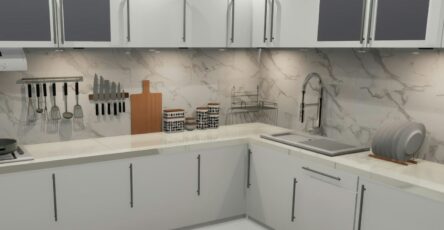
Kitchen Storage
Common problems include:
- Countertop clutter
- Pantry overflow
- Duplicate tools
- Small appliances occupying convenient cabinets
Possible improvements:
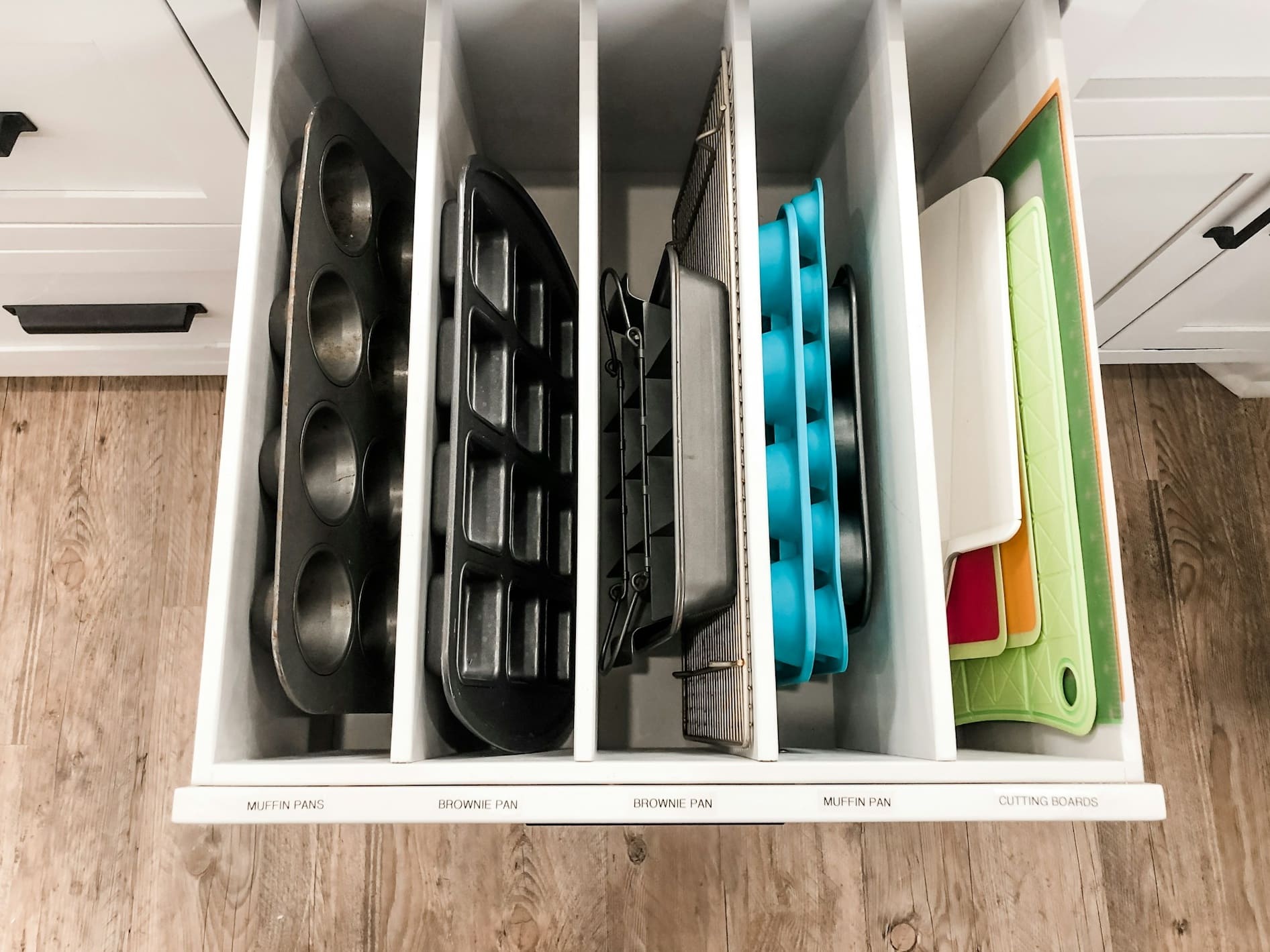
- Vertical cabinet organizers
- Wall rails where appropriate
- Shelf risers
- Compatible cabinet-door storage
- Moving rarely used appliances out of prime storage
Keep daily cooking tools accessible and move occasional equipment farther away.
Bathroom Storage
For:
- Toiletries
- Towels
- Hair tools
- Cleaning products
consider:
- Wall cabinets
- Drawer dividers
- Over-door hooks
- Shelving on suitable unused wall areas
- Closed storage for backup products
Medicines, chemicals, and cleaning products may have specific storage requirements, so follow appropriate product and household-safety guidance.
Home Office Storage
Paper, cables, supplies, and equipment can quickly take over a small workspace.
Possible solutions include:
- Vertical shelving
- Wall-mounted file holders
- Cable organization
- Desk drawers
- Closed storage boxes
Move paperwork off the desk whenever possible so the work surface remains usable.
Small-Space Storage Problems and Solutions
| Storage Problem | Smart Storage Move | Best For |
|---|---|---|
| Not enough floor space | Use tall or wall-mounted storage | Books, offices, kitchens, bathrooms |
| Seasonal items fill closets | Use under-bed or high-shelf storage | Bedding, clothing, decorations |
| Furniture occupies most of the room | Choose pieces with built-in storage | Bedrooms, living rooms, entryways |
| Occasional guests require extra furniture | Use multifunctional or foldable pieces | Studios, living rooms, home offices |
| Door areas go unused | Use compatible over-door organizers | Towels, robes, bags, lightweight accessories |
| Counters collect clutter | Give small categories drawers, trays, or wall storage | Kitchens, bathrooms, offices |
| Open shelves look crowded | Move visually noisy categories behind doors or into boxes | Living rooms, bedrooms, offices |
| Corners go unused | Use narrow vertical storage where useful | Bedrooms, bathrooms, workspaces |
| Closets are inefficient | Organize vertically and by frequency of use | Clothing, shoes, accessories |
| Storage constantly overflows | Declutter before adding another container | Every room |
Keep Storage From Becoming Clutter
More storage does not automatically create a more organized home.
Without a system, additional storage can simply create more places to accumulate belongings.
Don’t Buy Containers First
Use this order:
- Declutter.
- Group related items.
- Assign each category a home.
- Measure the available space.
- Buy a container only if you still need one.
This prevents you from buying storage for belongings you later decide to remove.
Keep Categories Simple
Avoid overcomplicating your system.
For example:
Instead of:
- USB-C cables
- Old phone cables
- Short cables
- Black cables
- Travel cables
a single category such as:
Charging cables
may be easier to maintain.
Create detailed categories only when they help you find things faster.
Leave Some Empty Storage Capacity
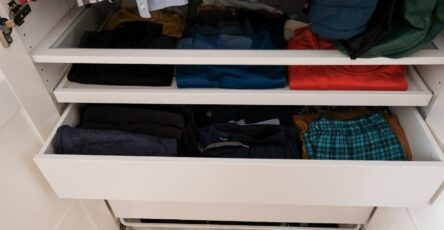
A completely packed drawer is difficult to maintain.
Returning one item may require rearranging everything else.
Leaving some breathing room makes the system easier to use and gives new items somewhere to go.
Use “One In, One Out” Selectively
You do not need to apply a strict rule to every possession.
Instead, use a full category as a signal to review what is already there.
If the shoe cabinet is completely full and you buy another pair, check whether you still wear all the shoes currently inside.
Pay Attention to Recurring Clutter
If the same clutter keeps returning to one location, the storage system may not match your habits.
Examples:
Bags always land on one chair.
Consider adding a hook nearby.
Mail always collects on the same counter.
Create an incoming-paper location there.
Blankets always stay on the sofa.
Add nearby concealed storage.
Chargers appear in every room.
Create a defined charging area.
Instead of repeatedly clearing the same pile, solve the reason it forms.
Small-Space Storage Mistakes to Avoid
Buying Bins Before Decluttering
Use:
Reduce → group → measure → add storage if necessary.
Filling Every Empty Space
Not every wall, corner, shelf, door, or gap needs storage.
Your home still needs:
- Movement
- Light
- Comfortable access
- Some visually open space
Storing Everyday Items Too High
Use high storage primarily for lower-frequency belongings.
Daily essentials should generally be easy to reach.
Hiding Things So Well That You Forget Them
Use labels and predictable categories for deep or concealed storage.
Using Deep Boxes for Tiny Objects
Small items can disappear inside oversized containers.
Match the container to the category.
Buying Bulky “Space-Saving” Furniture
Check the normal footprint and the space required when the furniture is open.
A large multifunctional piece can occupy more space than the smaller pieces it was meant to replace.
Ignoring Furniture Tip-Over Risk
Tall storage units may need anchoring according to their design and manufacturer guidance.
Keep safety in mind when placing heavy items, particularly in homes with children.
Blocking Doors or Exit Routes
Storage should never make doors or normal exit routes difficult to use.
An extra cabinet is not worth compromising the basic function of the room.
Guessing About Wall Fasteners
Floating shelves, cabinets, rails, and other mounted systems require fixings suitable for both:
- The wall
- The intended load
Use the instructions supplied by the manufacturer instead of assuming one anchor works everywhere.
A Simple Order for Adding Storage to Any Small Space
When you need more storage but do not know where to begin, follow this sequence:
- Choose one cluttered area.
- Remove what you no longer need.
- Group what remains by category.
- Identify where each category is actually used.
- Keep frequently used items easiest to reach.
- Look upward before adding more floor furniture.
- Check beneath, behind, and inside furniture you already own.
- Ask whether one multifunctional piece could replace two separate items.
- Use closed storage for visually noisy belongings.
- Measure before buying furniture or containers.
- Follow installation and load instructions.
- Change the system if the same clutter starts returning.
This turns storage planning into a process instead of a collection of random hacks.
Frequently Asked Questions About Storage for Small Spaces
What Are the Best Smart Storage Ideas for Small Spaces?
Start by decluttering. Then use vertical storage, hidden areas under furniture, multifunctional pieces, wall and door space, and a combination of open and closed storage. Keep frequently used items easiest to reach and move seasonal belongings into secondary storage.
How Can I Create More Storage Without Adding Furniture?
Consider:
- Floating shelves
- Wall cabinets
- Pegboards
- Hooks
- Over-door organizers
- Under-bed boxes
- Compatible cabinet-door storage
- Better organization inside existing closets
Look at unused vertical and concealed spaces before adding another floor cabinet.
How Do I Use Vertical Space for Storage?
Use tall shelving, wall-mounted cabinets, hooks, rails, and upper shelves. Keep everyday belongings within convenient reach and use higher storage for items needed less frequently.
Any wall-mounted storage should use appropriate hardware and follow manufacturer load instructions.
What Should I Store Under My Bed?
Suitable items may include:
- Extra bedding
- Seasonal clothing
- Spare pillows
- Shoes
- Travel accessories
Choose containers that fit the actual clearance under your bed and work with the bed frame.
Is Multifunctional Furniture Worth It in a Small Space?
It can be when the second function replaces something you would otherwise need.
For example, a storage ottoman can replace both a footrest and a separate blanket basket, while a sofa bed can provide occasional sleeping space without requiring a permanent guest bed.
How Do I Stop a Small Room From Looking Cluttered With Storage?
Use:
- Closed cabinets
- Fewer visible containers
- Simple categories
- Edited open shelving
- Labels where useful
- Some intentionally empty space
Not everything needs to be displayed.
Should I Use Every Empty Wall and Corner for Storage?
No.
Only use additional storage when it solves a real problem. Filling every wall and corner can make a small room harder to move through and visually busier.
Conclusion
A small home does not necessarily need more storage furniture. It often needs more intentional use of the space already available.
Remember this sequence:
Reduce → prioritize → look up → hide strategically → combine functions → maintain.
Declutter before adding containers. Keep everyday items easy to reach. Use walls before crowding the floor. Put the hidden space beneath furniture to work. Let furniture perform more than one useful job when that actually replaces something else. Mix open storage with closed storage so practical belongings do not overwhelm the room.
Most importantly, do not compromise safe mounting, furniture stability, or clear doors and exits simply to fit in a little more storage.
Before buying another cabinet or stack of bins, choose one overflowing area and look above it, beneath it, behind it, and inside the furniture already there.
You may already have more usable storage space than you think.